
Mallorca 4-Day Itinerary: A Local's Guide to the Perfect Island Escape
A complete guide to exploring Mallorca's best beaches, mountain villages, and hidden gems in 4 days. Updated for 2026.

4 Days in Mallorca: The Only Itinerary You Need (Palma, the Tramuntana, and the South Coast)
I love Mallorca. I still find myself scrolling through photos of Cala Figuera months after leaving, the kind of place that stays with you long after the trip ends. The beaches here are genuinely some of the most beautiful in Spain or the Mediterranean. Then there are the small towns, Deià and Fornalutx stacked into hillsides, all stone houses and narrow streets that feel untouched by time. Mallorca fits an enormous amount of beauty into a small space, mountains, coastline, and old towns all within an hour of each other, and it does every part of it well.
Most Mallorca itineraries do one of two things. They either park you in Palma for three days and call one afternoon trip to Valldemossa "exploring the island," or they send you chasing Instagram photos of Sa Calobra and Cala d'es Moro without a realistic plan for how much driving that actually involves. Neither gives you the island.
This is a 4-day loop that actually covers Mallorca: old town Palma, the mountain villages of the Serra de Tramuntana, and the calas of the southeast coast. It's built from a trip I actually did, with real timing, so you're not guessing whether Sa Calobra and Formentor can happen on the same day (they can, if you do it right) or whether Cala d'es Moro is worth the walk (it is, but only if you go early).
Who this is for: first-timers who want more than a beach week and want to see what Mallorca is all bout, keep reading.
A quick note on where this comes from: I've lived in Spain for five years and spent that time actually exploring it, not just visiting the obvious spots. This itinerary isn't pulled from a guidebook, it's the trip I did, with the timing and the mistakes ironed out.
The Quick Answer
Day 1: Arrive in Palma, walk the old town and the Cathedral, sunset at Sant Francesc Hotel
Day 2: Valldemossa, Deià, lunch at Ca's Patró, Sóller and Fornalutx, Sa Calobra and Torrent de Pareis, sunset boat tour from Port de Sóller
Day 3: Cala Llombards, Cala d'es Moro, lunch at Cassai, Es Pontàs, Santanyí, Cala Figuera
Day 4: Slow morning, lunch at El Olivo at La Residencia, spend the rest of the day in Palma
Four days is enough to cover this loop without feeling rushed on any single day, but it's tight. And honestly, four days is enough to see Mallorca, not to exhaust it. There's so much more here, more calas, more hill towns, more of that coastline, that you could easily stay an extra few days or a full week and not run out of places worth going. If you can add a fifth day, add it to Day 2 and split the Tramuntana into two days instead of one.
If you're a beach-first traveler, this itinerary still works, but shift the balance. Trim Day 1's old town wandering to the Cathedral and gelato only, and use the extra hour to get to Cala d'es Moro or Cala Figuera earlier on Day 3, before the crowds arrive. You can also swap the Sóller/Fornalutx village stop on Day 2 for extra time at Cala de Sa Calobra itself rather than treating it as a quick photo stop, the water there is genuinely worth lingering in, not just photographing from above.
Before You Go: The Practical Stuff
Best time to visit. Late May through June, or September into early October, is the sweet spot. You get warm, reliable weather without the July-August crowds and heat that make midday driving on the Tramuntana roads genuinely unpleasant, and without prices spiking the way they do in peak summer. If you can only travel in July or August, do the coastal stops (Days 1 and 3) in the early morning or late afternoon and treat midday as pool or shade time.
How to get there, flying from the US. There are no direct flights from the US to Palma de Mallorca (PMI). The standard route is to fly into Madrid (MAD) or Barcelona (BCN) and connect on a short flight to Palma, roughly 1 to 1.5 hours from either city on carriers like Iberia, Vueling, or Air Europa. Barcelona is the better connection if you can choose: more frequent flights to Palma and a shorter, cheaper hop. Build in at least a 2-hour connection window; Spanish domestic terminals aren't always adjacent to the international arrivals area. Once you land at PMI, the airport is about a 15-20 minute drive from central Palma, and every major car rental company has a desk right in the terminal, which is where you'll want to pick up your car for this itinerary.
What this trip costs, roughly. For two people traveling mid-range, similar to what's in this itinerary (a few splurge meals, a solid but not five-star Airbnb, a compact rental car), budget somewhere around €150-220 per person per day, excluding international flights. That breaks down roughly as:
Car rental: €35-60/day for a compact, plus fuel
Accommodation: €120-200/night for a comfortable Airbnb or 3-4 star hotel, split two ways
Meals: €15-25 for a casual lunch, €40-70 per person for a sit-down dinner, more for a splurge like La Residencia (closer to €90-120 per person)
Activities and parking: small parking fees at the calas and Cathedral entry (around €10) boat tours around €50-€250 per person
International flights from the US typically add €400-1000 per person round-trip depending on season and how far ahead you book, on top of the above.
Treat every number above as a starting point, not a quote. Prices in Mallorca swing hard by season, July and August rates for cars and Airbnbs can run well above what you'd pay in May or October, and everything from fuel to restaurant menus has crept up in recent years. Add a 20-30% buffer to these figures when you're actually budgeting, especially if you're traveling in peak summer or booking less than a month out.
You need a car. This isn't optional for this itinerary. The Tramuntana villages and the southeast calas are not connected by any bus route that makes sense for a 4-day trip. Rent something small; the mountain roads are narrow and you'll be grateful for a compact car on the switchbacks near Sa Calobra.
Where to stay. Palma itself works, but you don't need to be inside the city to make this loop efficient. A better move is basing yourself somewhere in the countryside just outside Palma, in the central Es Pla region (towns like Algaida, Santa Maria del Camí, or Marratxí), or anywhere within a 15-20 minute drive of the city. You get a quieter stay, often a proper pool and outdoor space if you're renting an Airbnb or finca, and you're still close enough that both the Tramuntana day and the southeast calas day stay manageable round trips instead of full relocations. Avoid basing yourself directly in Sóller or Santanyí; both sound romantic, but you'll add 40 minutes to every leg of the trip in the days you're not staying there.
[Hotel and Airbnb-area picks coming soon]
The one mistake almost everyone makes: trying to do Sa Calobra, Torrent de Pareis, and Cap de Formentor in a leisurely, unplanned day. Both are worth it, but they're on opposite ends of the north coast and the road to Sa Calobra (the Ma-2141) is a slow, hairpin-heavy drive that takes far longer than the map distance suggests. If you're set on driving to both, do Sa Calobra first, before midday crowds fill the small parking area, and treat Formentor as your sunset stop, not a leisurely lunch spot. Or skip the second long drive entirely and close the day with a sunset boat tour from Port de Sóller instead, see Day 2 below.
Day 1: Palma — Arrival and Old Town
Land, get the car, drop your bags. Once you're checked in, the rest of the day is entirely walkable.
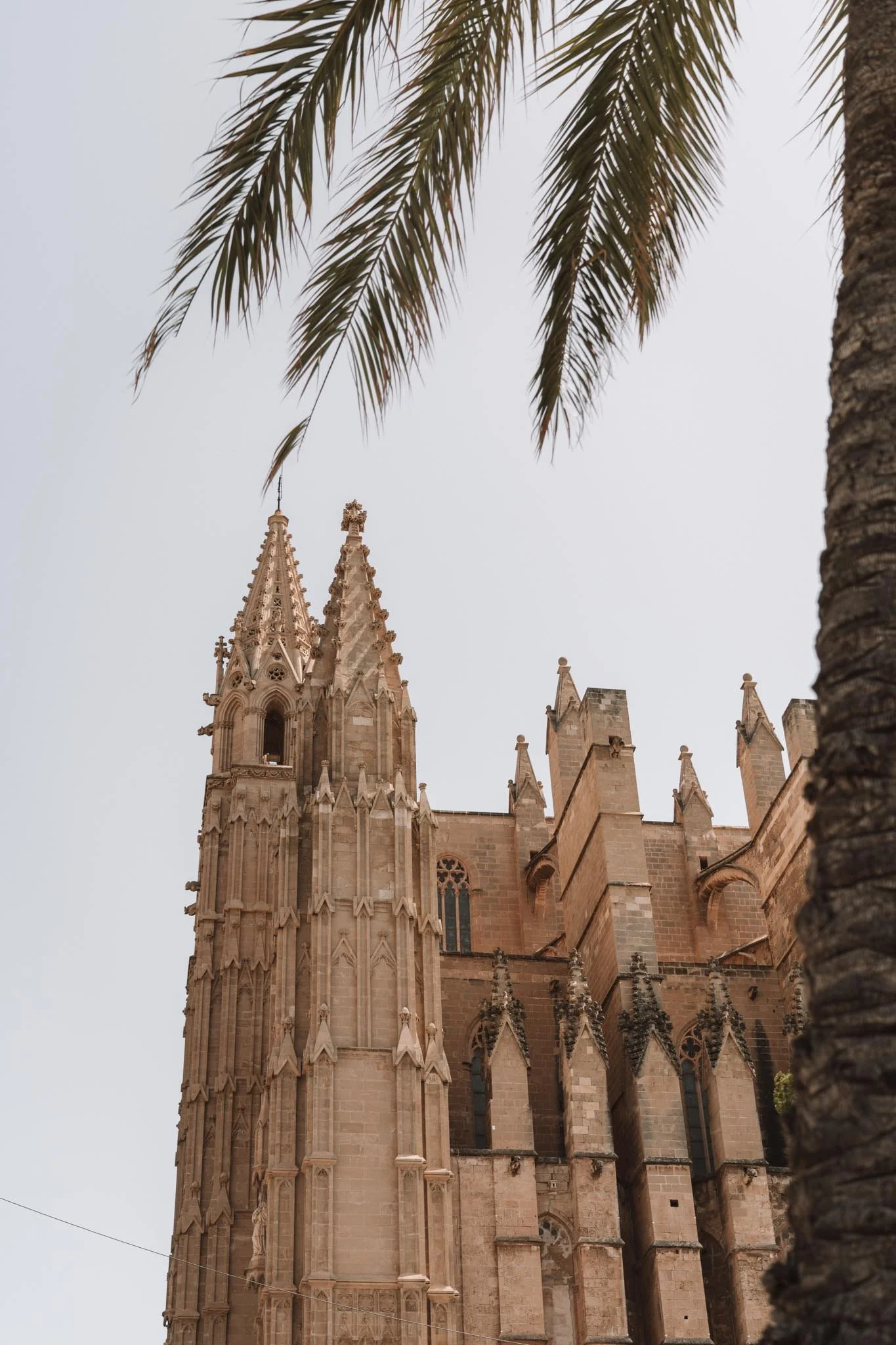
Start in the old town and let yourself get lost in the streets around the Cathedral before you actually go inside. La Seu is one of the few "must-see" cathedrals in Spain that's genuinely worth the hype, the Gaudí-influenced interior and the rose window are not overstated. Go in the late afternoon if you can; the light through the window is the reason people queue for this.
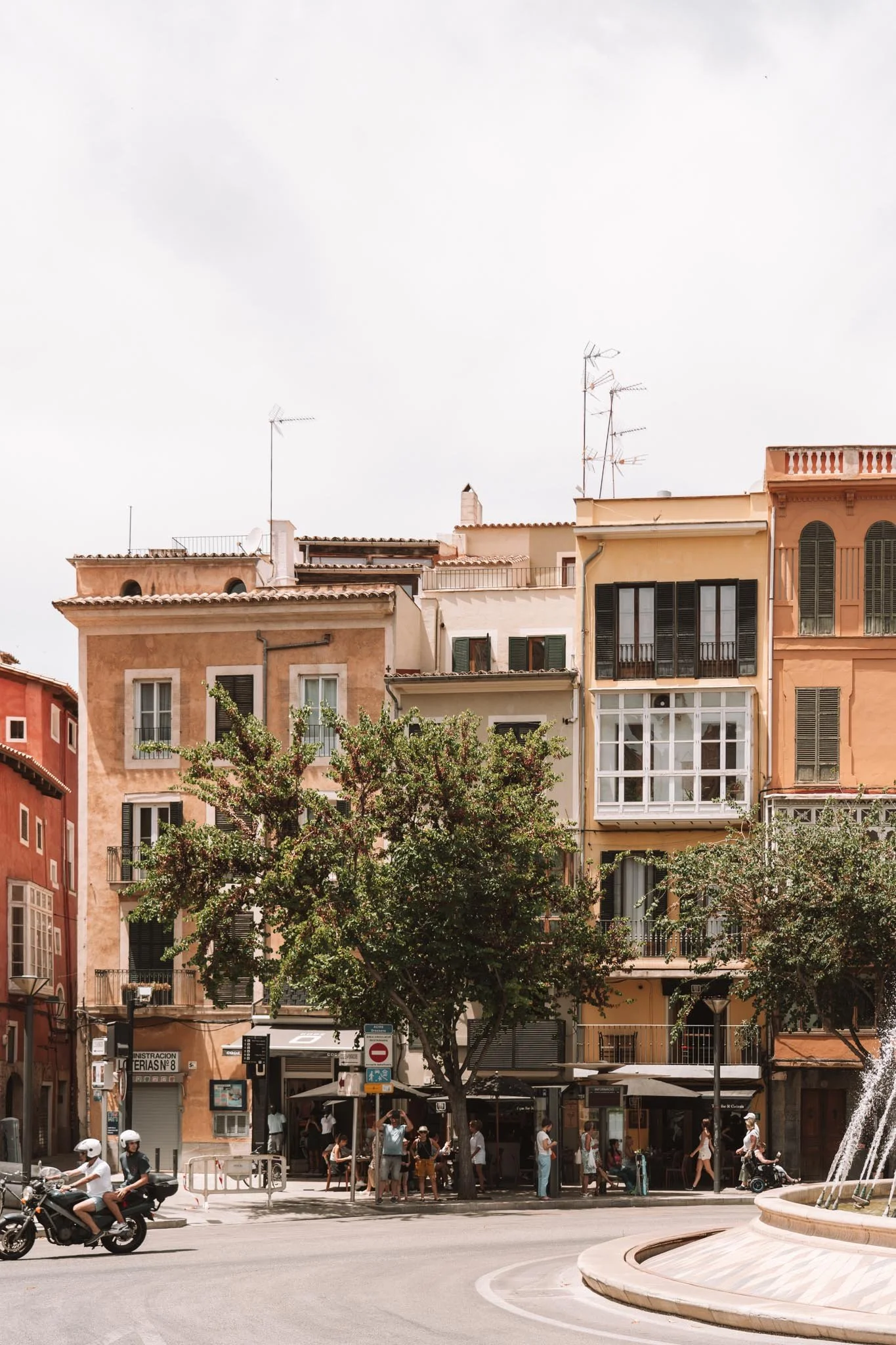
After the Cathedral, walk without a destination for an hour. This is the actual point of a Palma afternoon; the old town is small enough that you can't really get lost, and the side streets off Carrer de Sant Feliu and around Plaça Major are where the city actually looks like itself, not like a cruise-ship postcard.
Stop for gelato at Amorino near the old town. It's a chain, but it's a good one, and after a hot afternoon of walking you'll want it.
Close the day with sunset drinks at the Sant Francesc Hotel rooftop. It's not a secret, book ahead or go early, but the view over the Cathedral and the old town roofline is worth the reservation hassle.
Day 2: The Tramuntana — Valldemossa, Deià, Sóller, Sa Calobra, and a Sunset Boat Tour
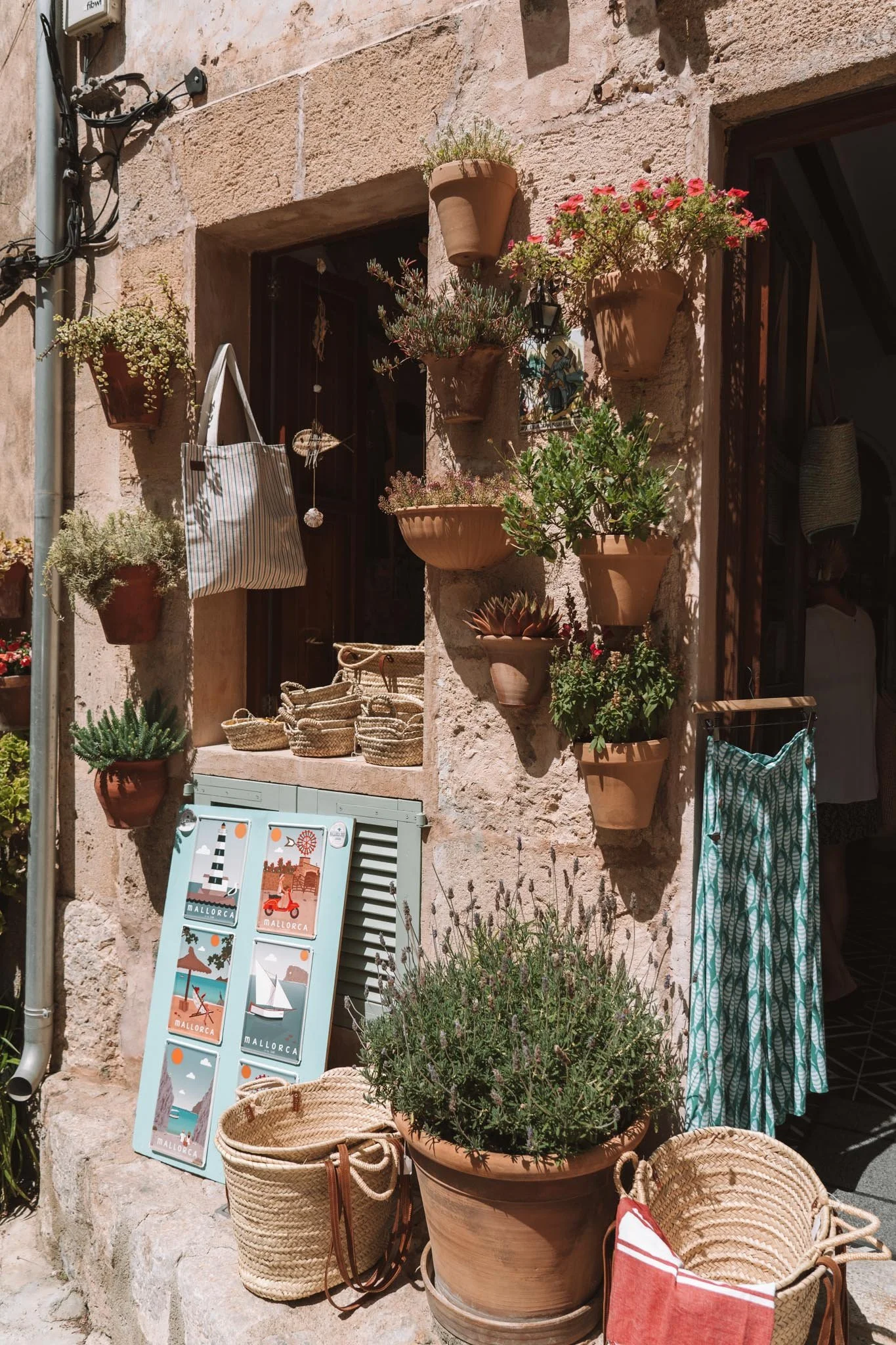
This is the day the whole trip is built around. Start early; you have a lot of ground to cover and most of it is on winding mountain roads that reward an early start with empty parking lots.
Valldemossa is your first stop, and it's the easiest one, a compact hill town with a monastery and enough charm to justify an hour of wandering, no more. Head straight for the Royal Carthusian Monastery (Cartuja de Valldemossa), where Chopin and George Sand famously spent a winter, the cells and the old pharmacy inside are worth the entry fee. Afterward, walk the narrow lanes around Plaça Cartoixa and up Carrer de Blanquerna, lined with stone houses and pots of geraniums that make this the most photographed street in town. If you have even fifteen extra minutes, the Rei Joan Carles I Gardens just below the monastery give you a clean view over the valley without the crowds. Don't linger longer than an hour here; it's the warm-up act.
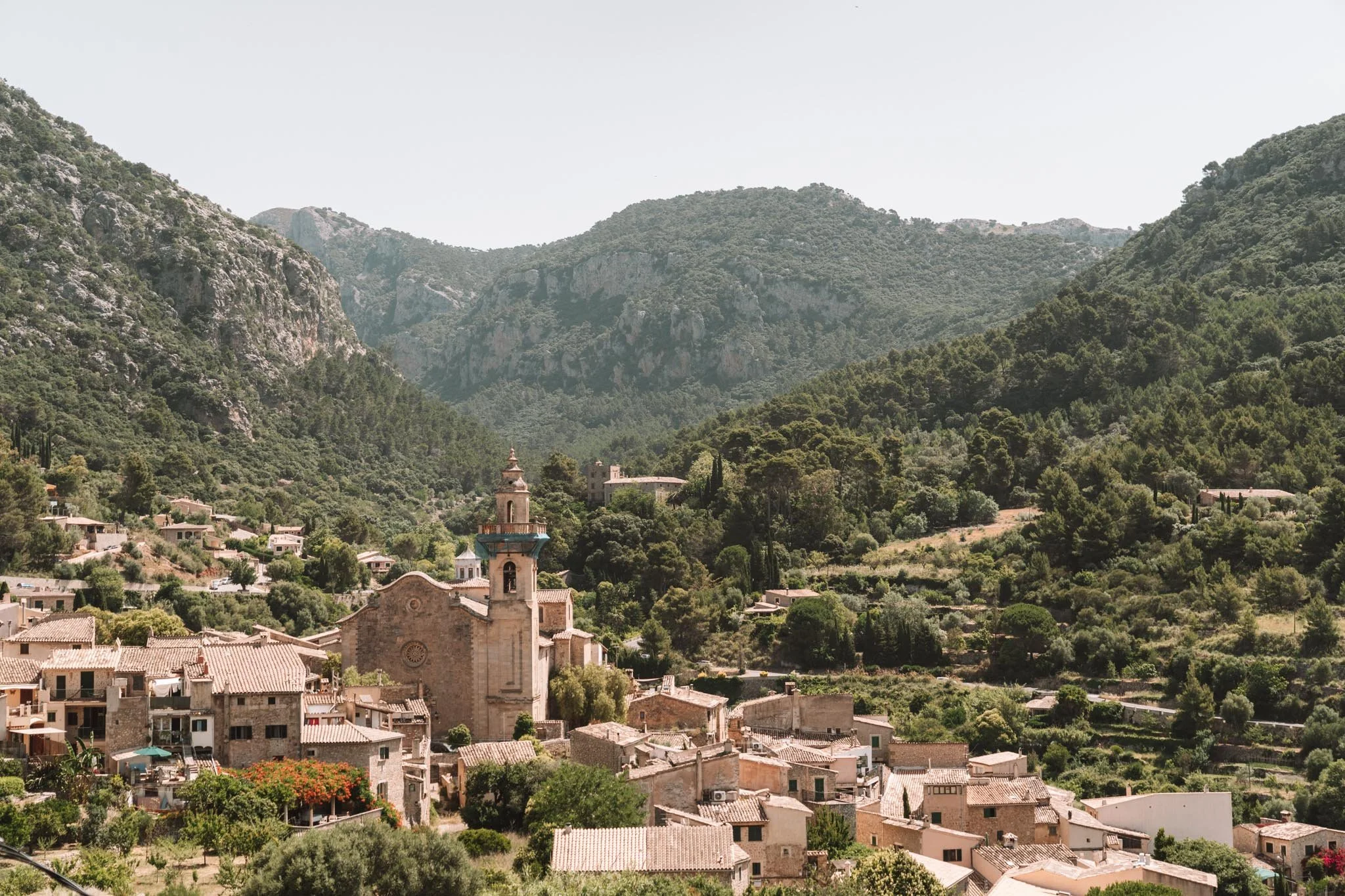
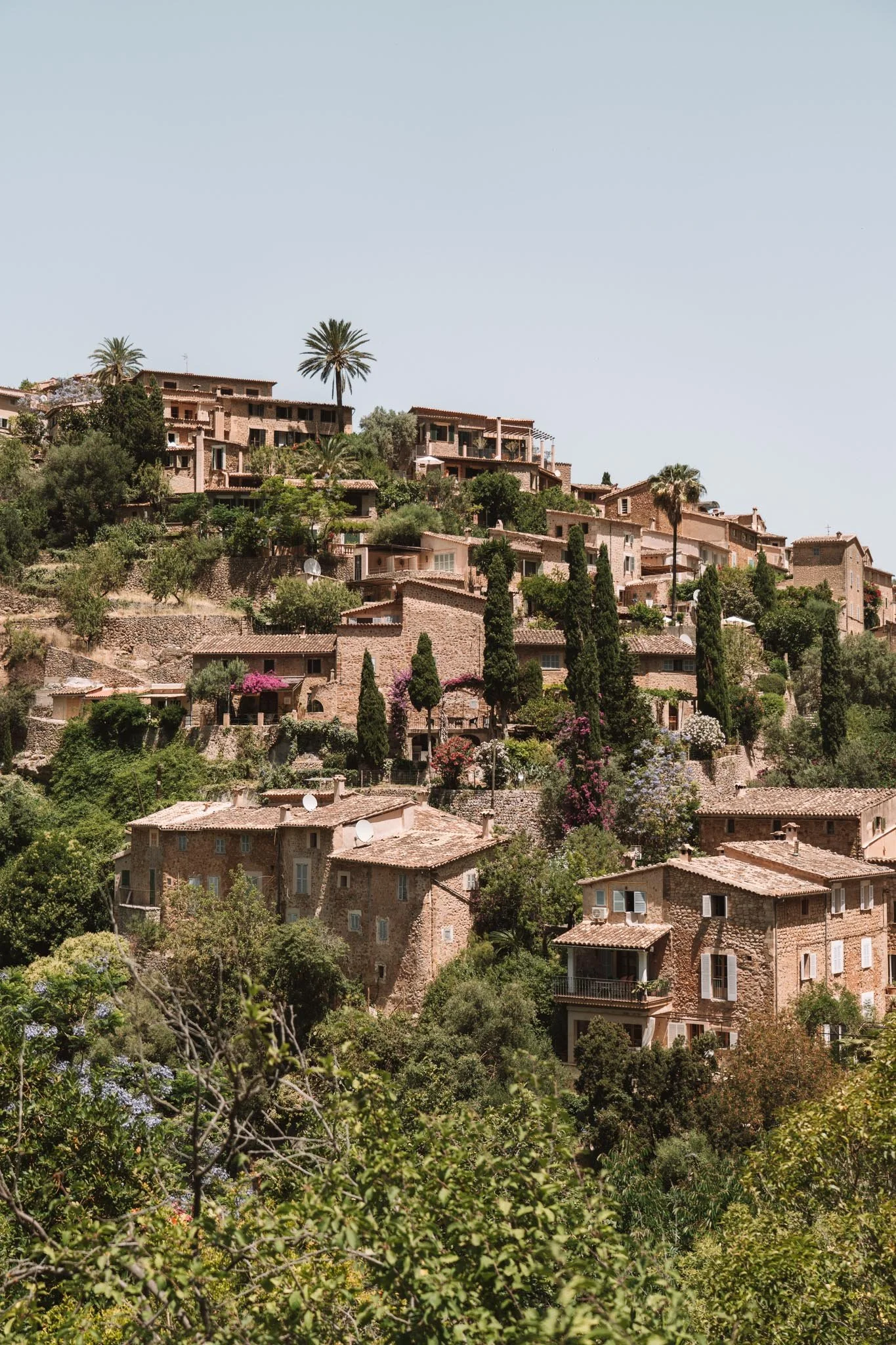
Deià is the real reason people fall in love with this coast. It's a cluster of stone houses stacked into a hillside above the sea, and it's genuinely one of the prettiest villages in Spain, not an exaggeration. Walk down toward the small church at the top of the village for the view before you eat.
Lunch is at Ca's Patró, a cala-side restaurant just below Deià with tables practically on the rocks. Book ahead, this is not a walk-in spot in high season, and go for the fresh fish. It's not cheap, but it's the kind of meal you remember, not the kind you regret. If you can't get a table, Sa Foradada near Deià or a simple spot in Sóller's main square are solid backups that don't require booking weeks out.
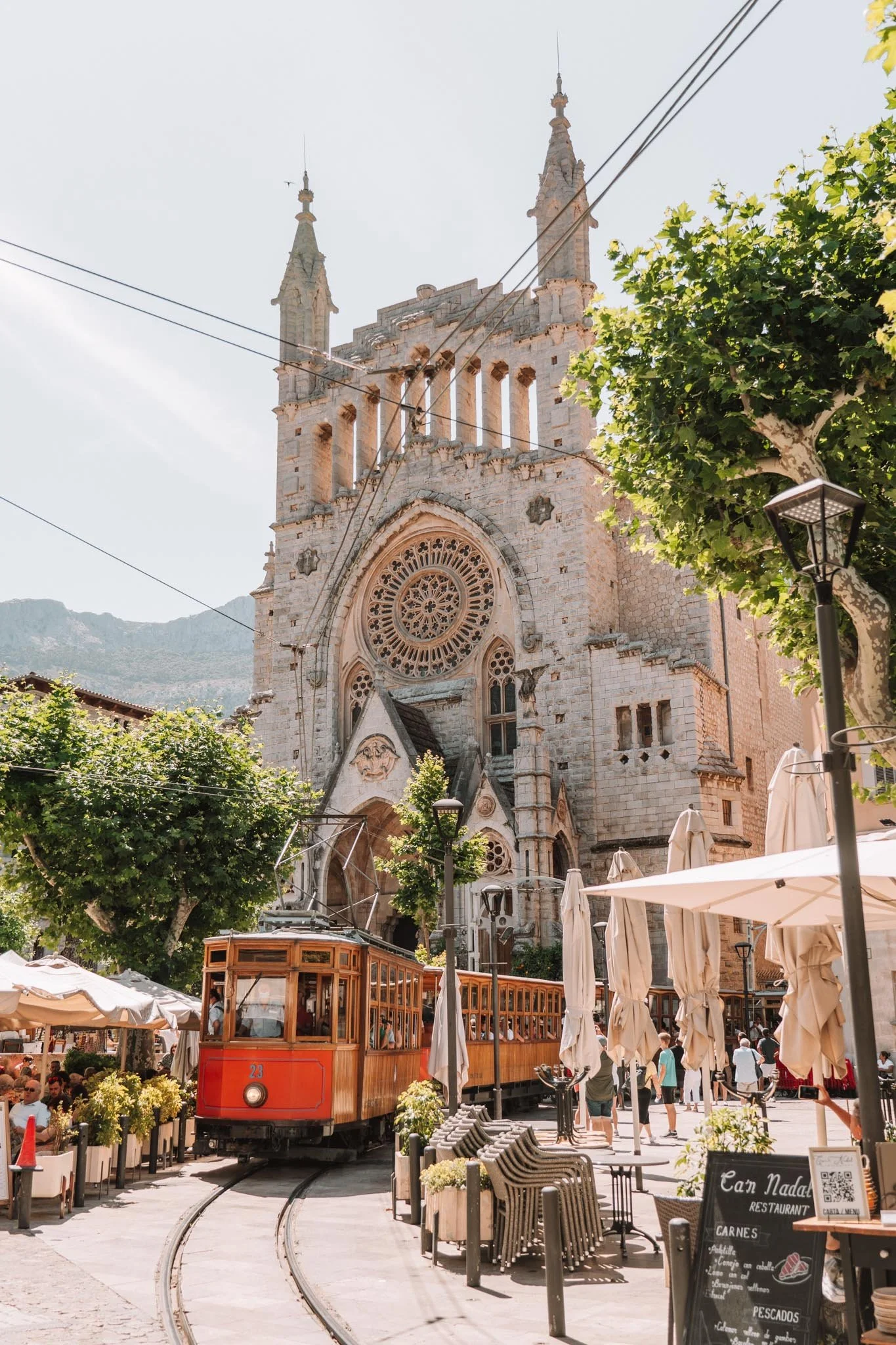
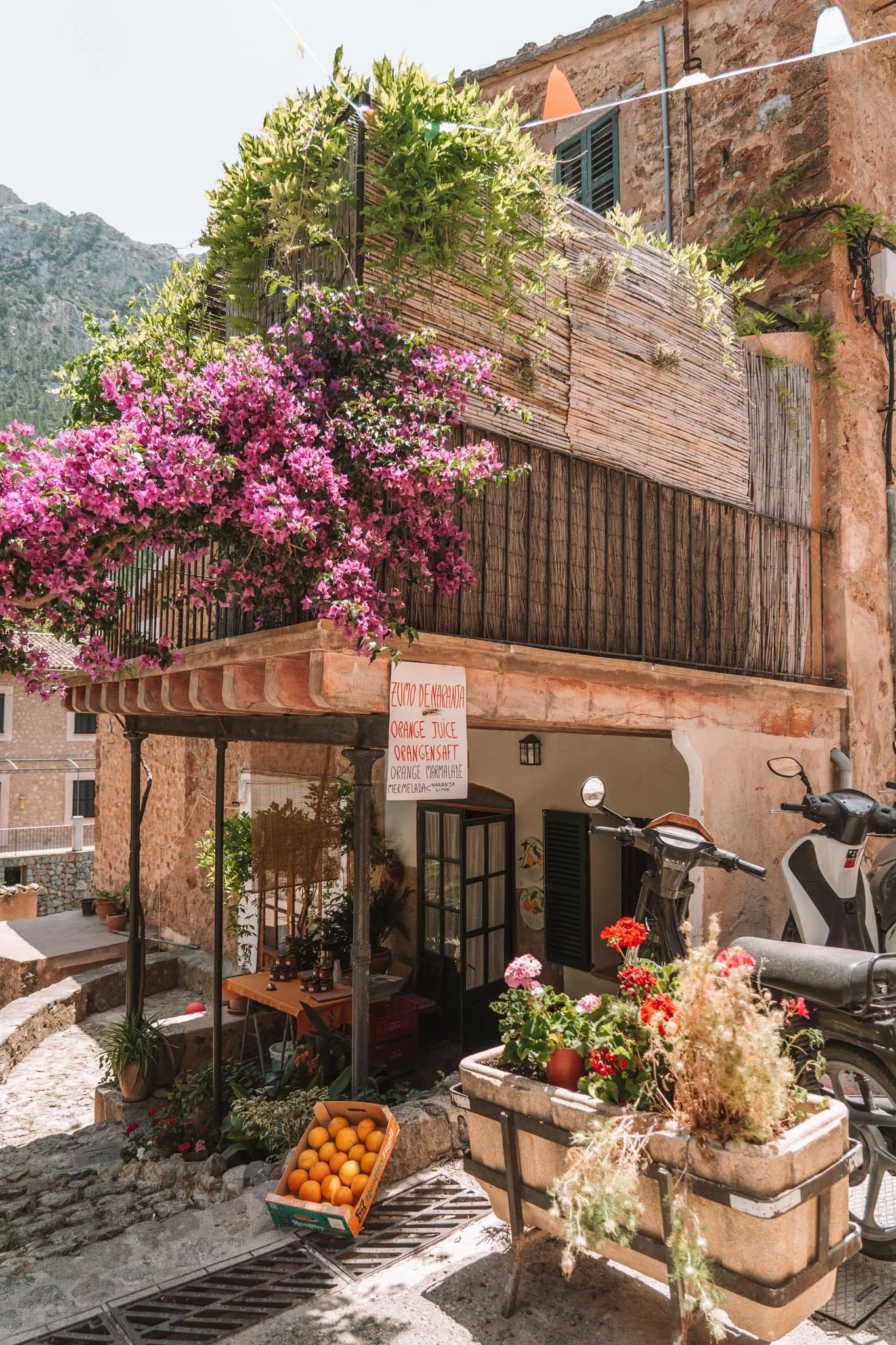
From Deià, continue to Sóller and Fornalutx. Sóller is a proper town built around Plaça de la Constitució, where the Gothic Sant Bartomeu church and a Modernista bank building (designed with input from Gaudí's circle) sit side by side, a coffee at one of the square's cafés is the move here. If you have time, ride the century-old wooden tram down to Port de Sóller, a short, scenic 20-minute run to the harbor that's an attraction in its own right, not just transport. Fornalutx is smaller and quieter, often called one of the prettiest villages in Spain, and it deserves the twenty minutes it takes to walk its stone streets. Head up toward Plaça d'Espanya at the top of the village for the best view back down over the orange groves and the mountains behind it.
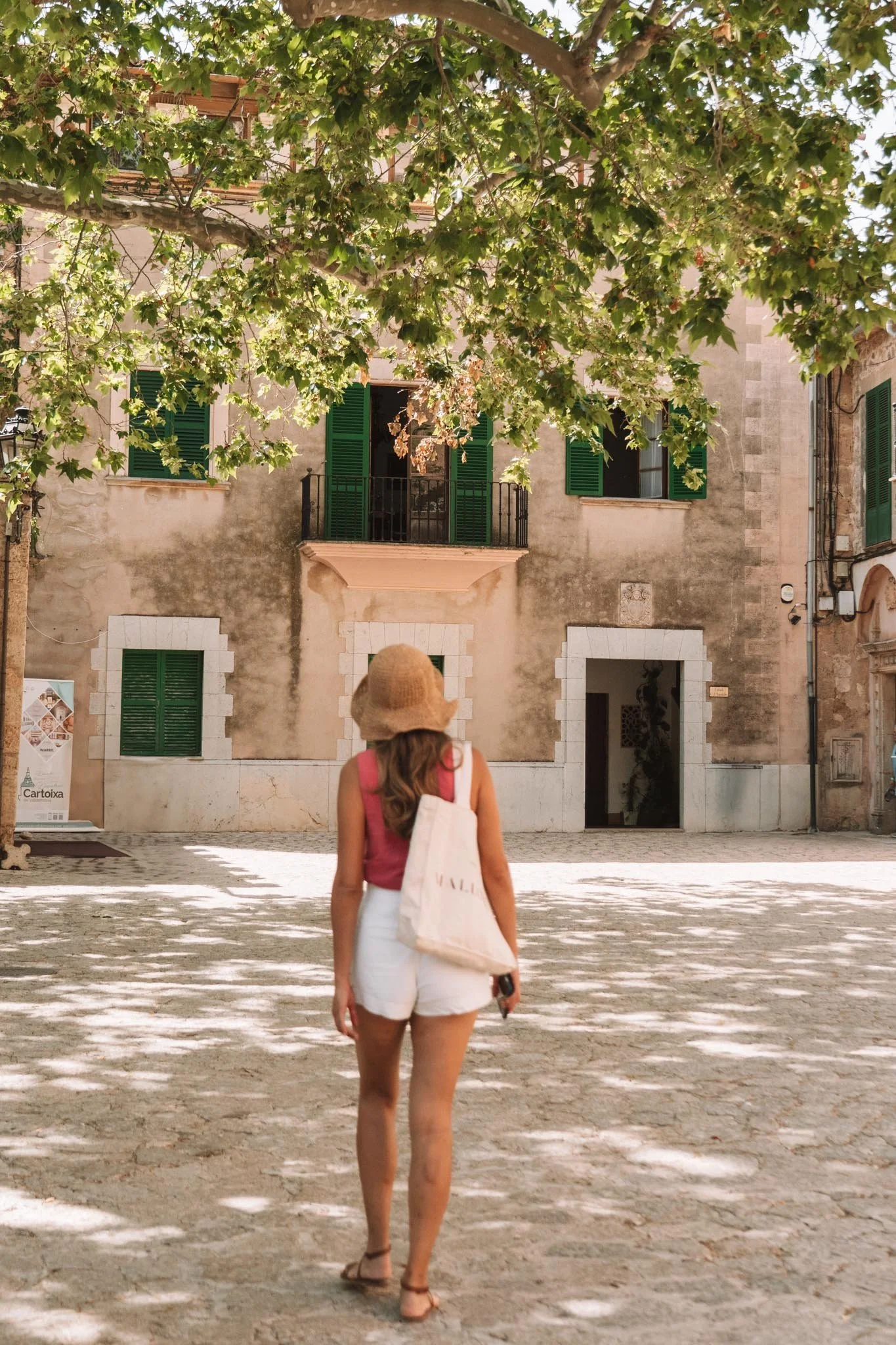
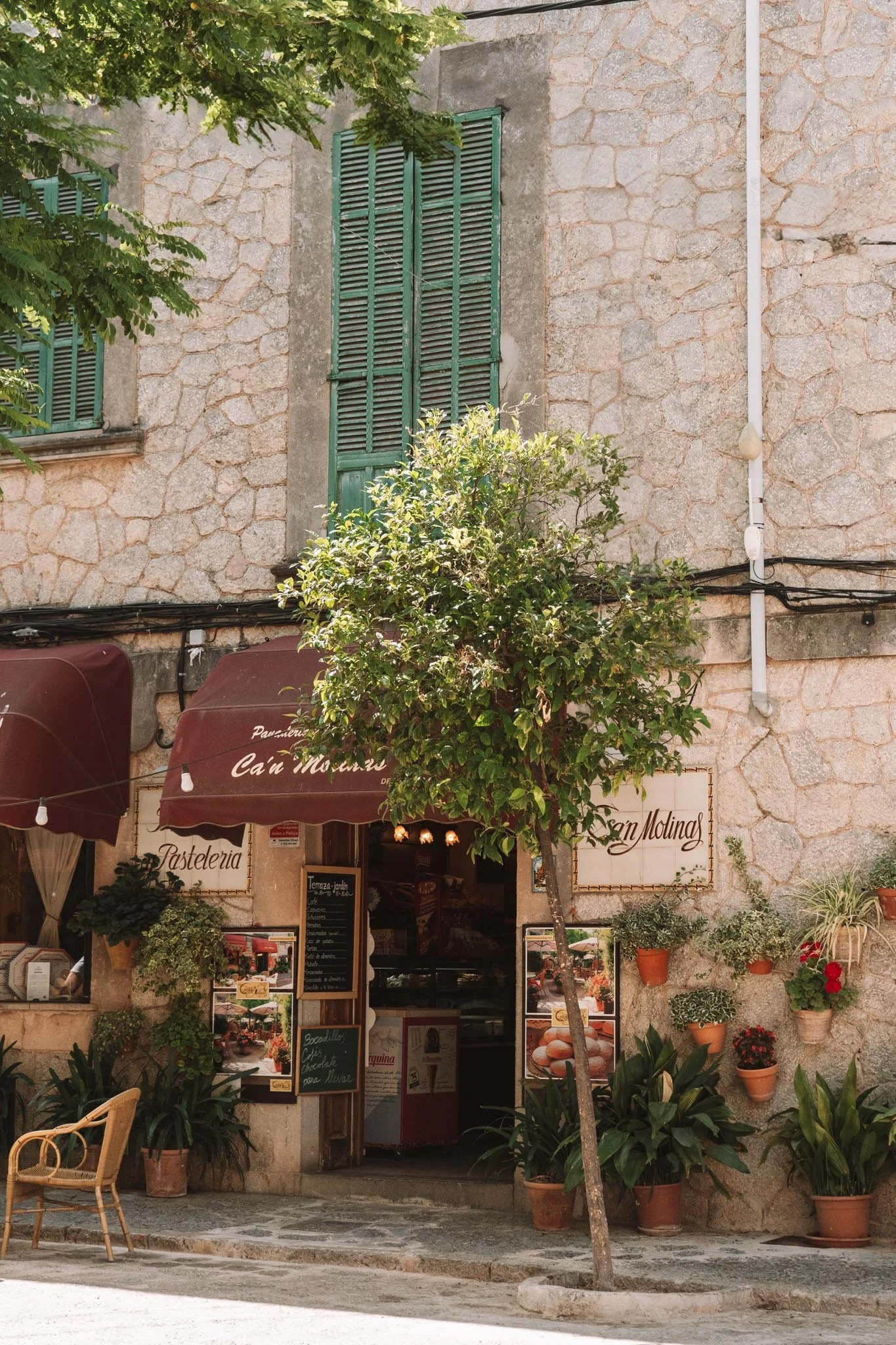
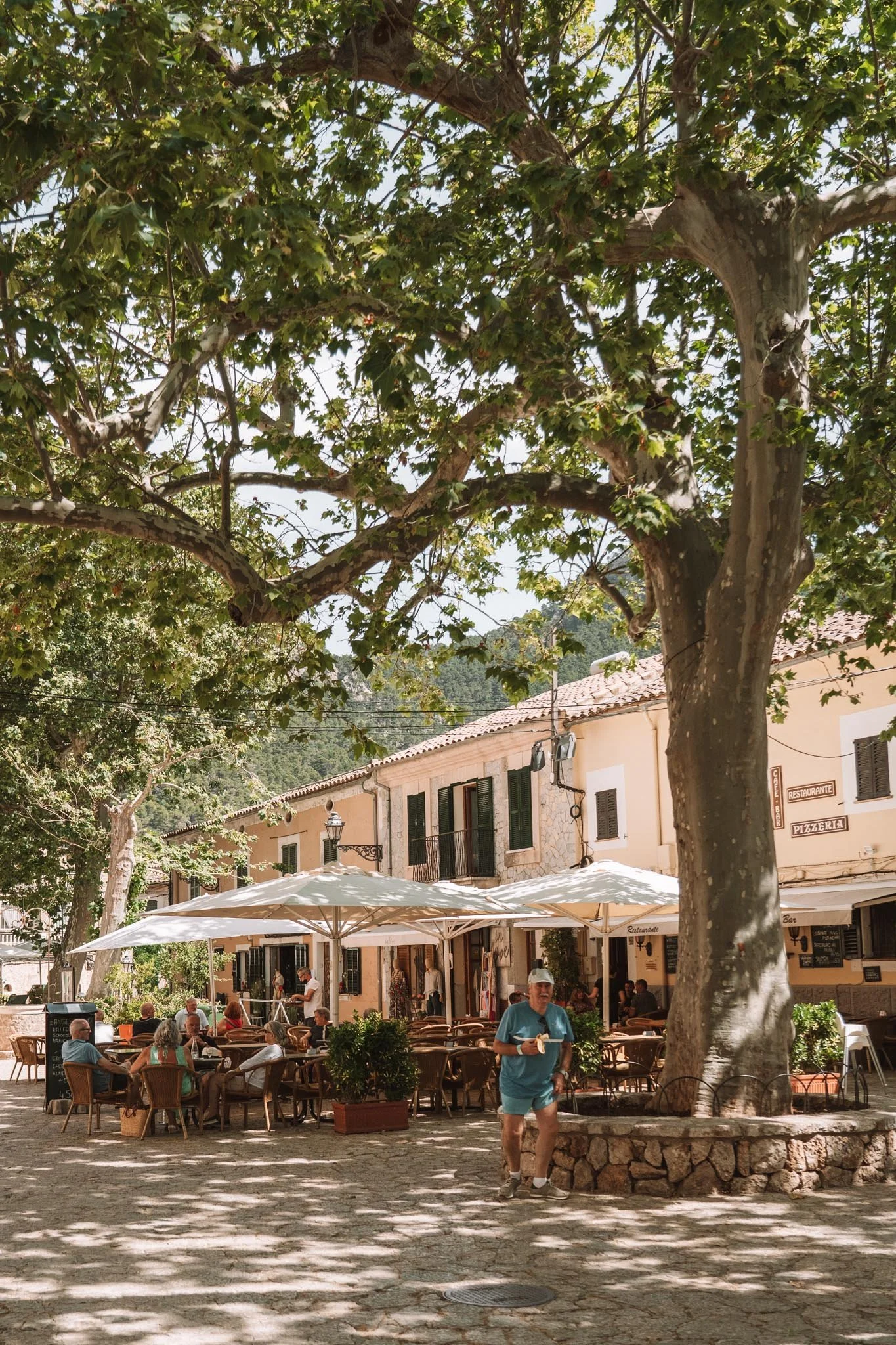
Now the ambitious part of the day: Sa Calobra and the Torrent de Pareis. The drive down is the attraction as much as the destination, a series of switchbacks that drop you to a small cove where the gorge meets the sea. Park early, the lot fills fast, and budget more time for the drive than Google Maps tells you. If you're short on time, the cove itself is the priority over hiking deep into the gorge. If the lot is full when you arrive, don't circle waiting for a spot, there's a second, smaller lot a short walk further up, or you can view the gorge from above at the Mirador de Ricardo Roca on the drive in as a fallback.
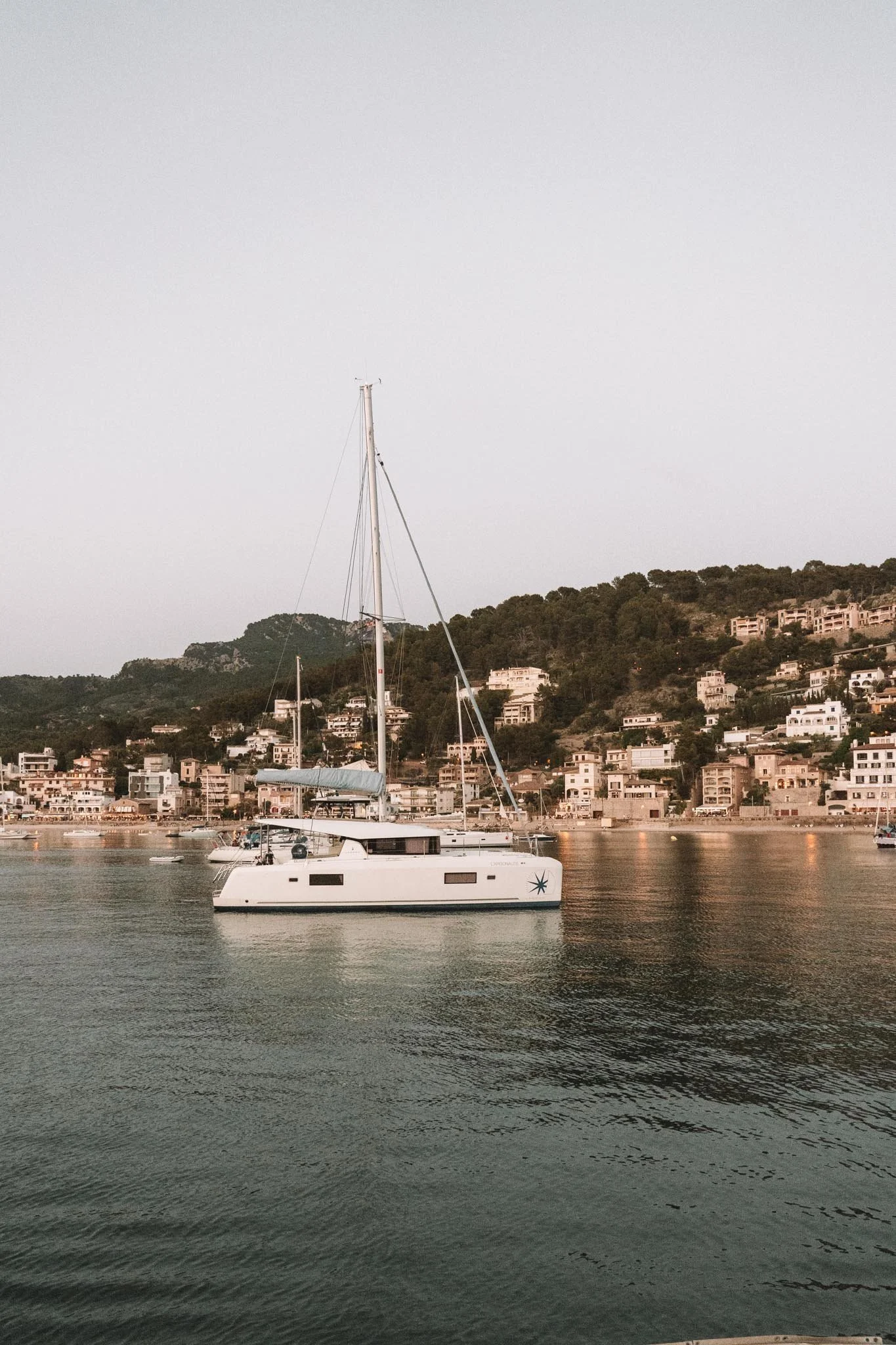
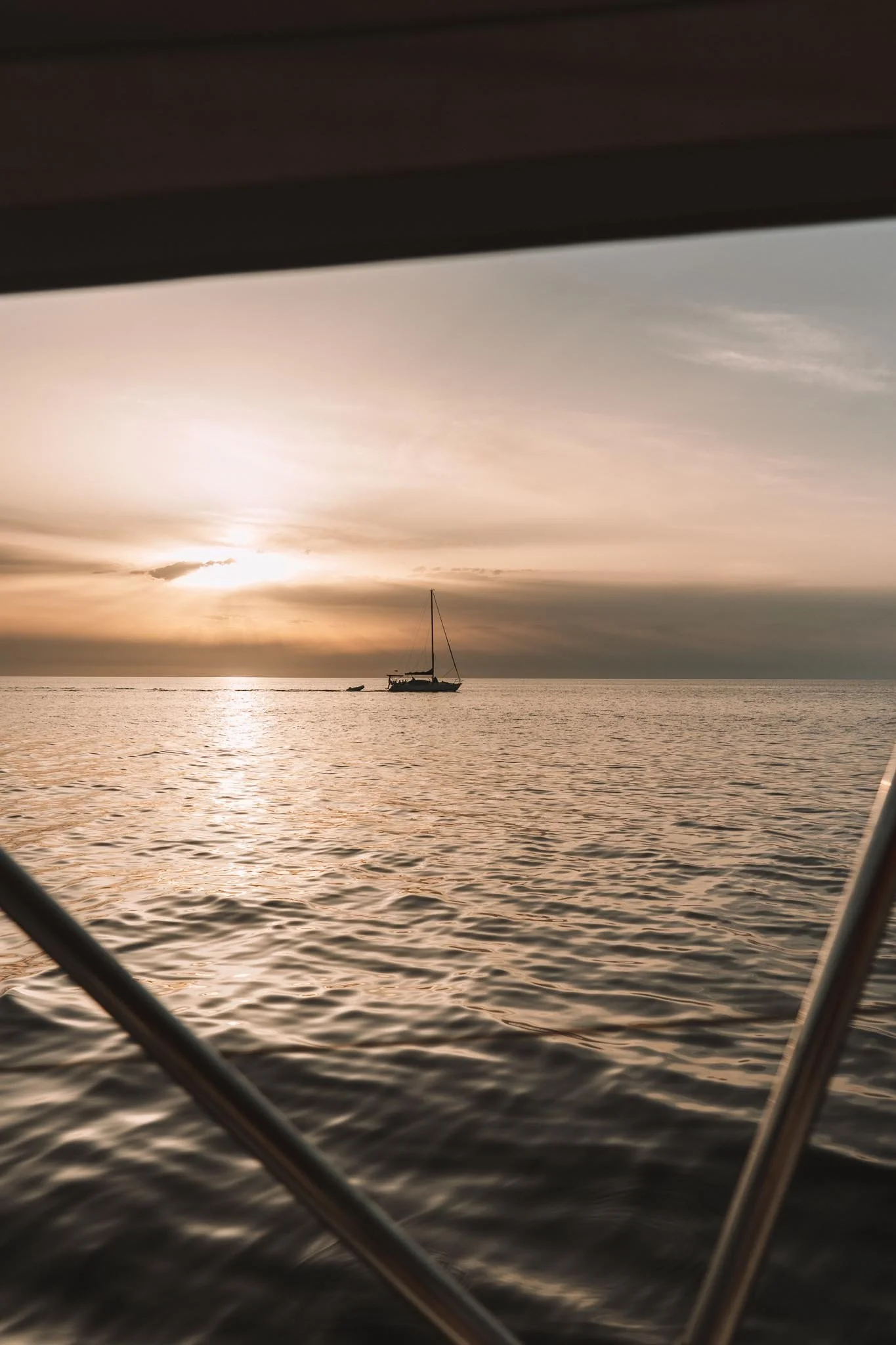
Head back toward Port de Sóller after Sa Calobra and close the day with a sunset boat tour rather than driving all the way out to Formentor. This is what I actually did, and it's the better call for this specific day: you're gliding along the same dramatic coastline you just spent the afternoon looking at from above, with a drink in hand instead of your hands on the wheel after a full day of mountain driving. Book ahead in high season, these fill up.
If you'd rather drive it than sail it, Cap de Formentor is the alternative closing move. The drive out to the lighthouse is dramatic in its own right, and the viewpoint near the Mirador Es Colomer is the payoff, cliffs dropping straight into turquoise water with the whole northern coastline laid out below you. It's a genuinely great sunset spot, but it adds well over an hour of driving each way on top of an already full day, so treat it as a trade, not an addition. If you want both the boat tour and Formentor properly, that's the case for splitting this into two days instead of one, see the extra-days section below.
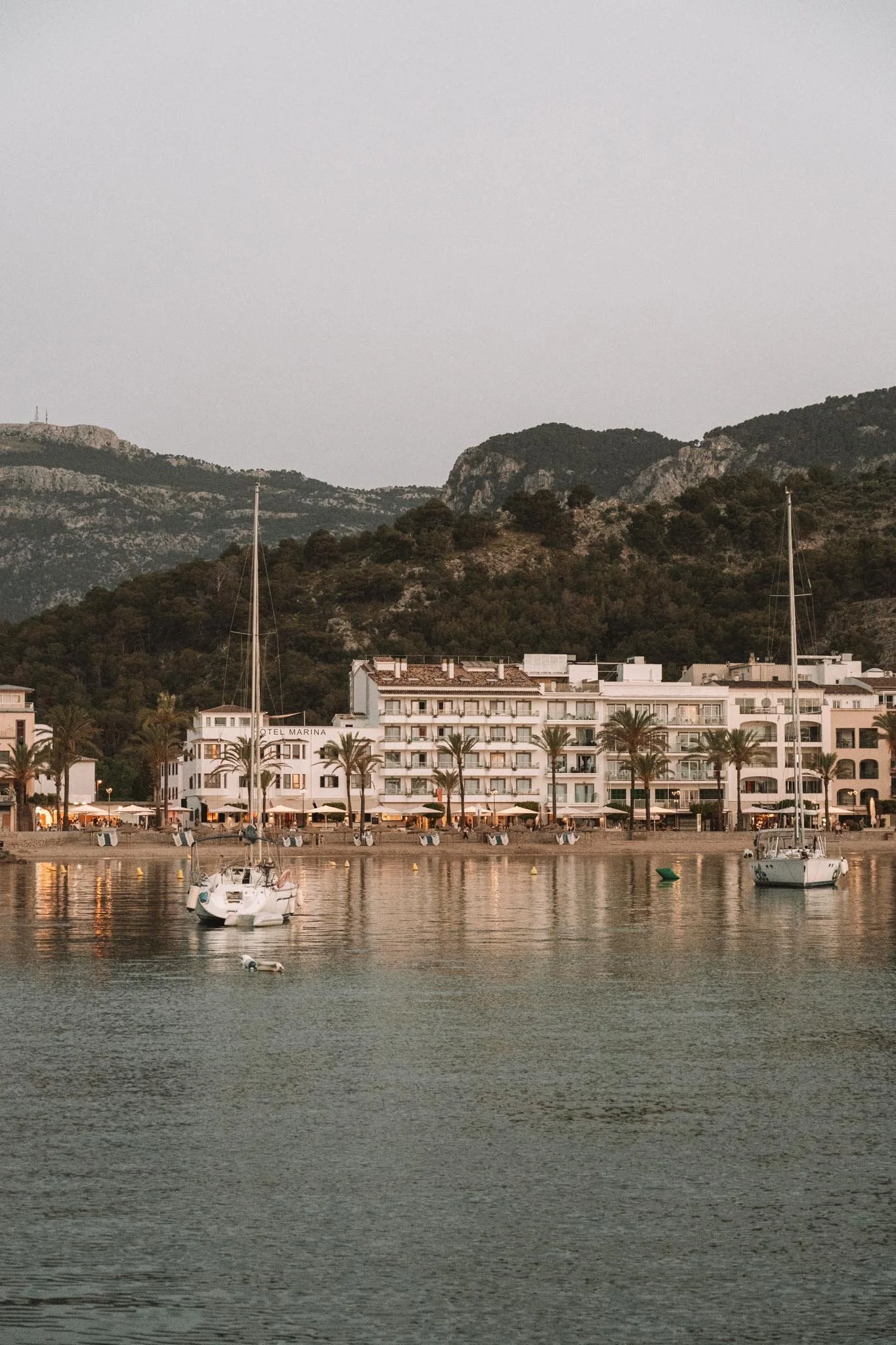
Day 3: The Southeast Calas — Llombards, Es Pontàs, Santanyí, Cala Figuera
Different energy today, less mountain driving, more coastline hopping. Start at Cala Llombards, a smaller, quieter cove that's a good warm-up before the more famous stop.
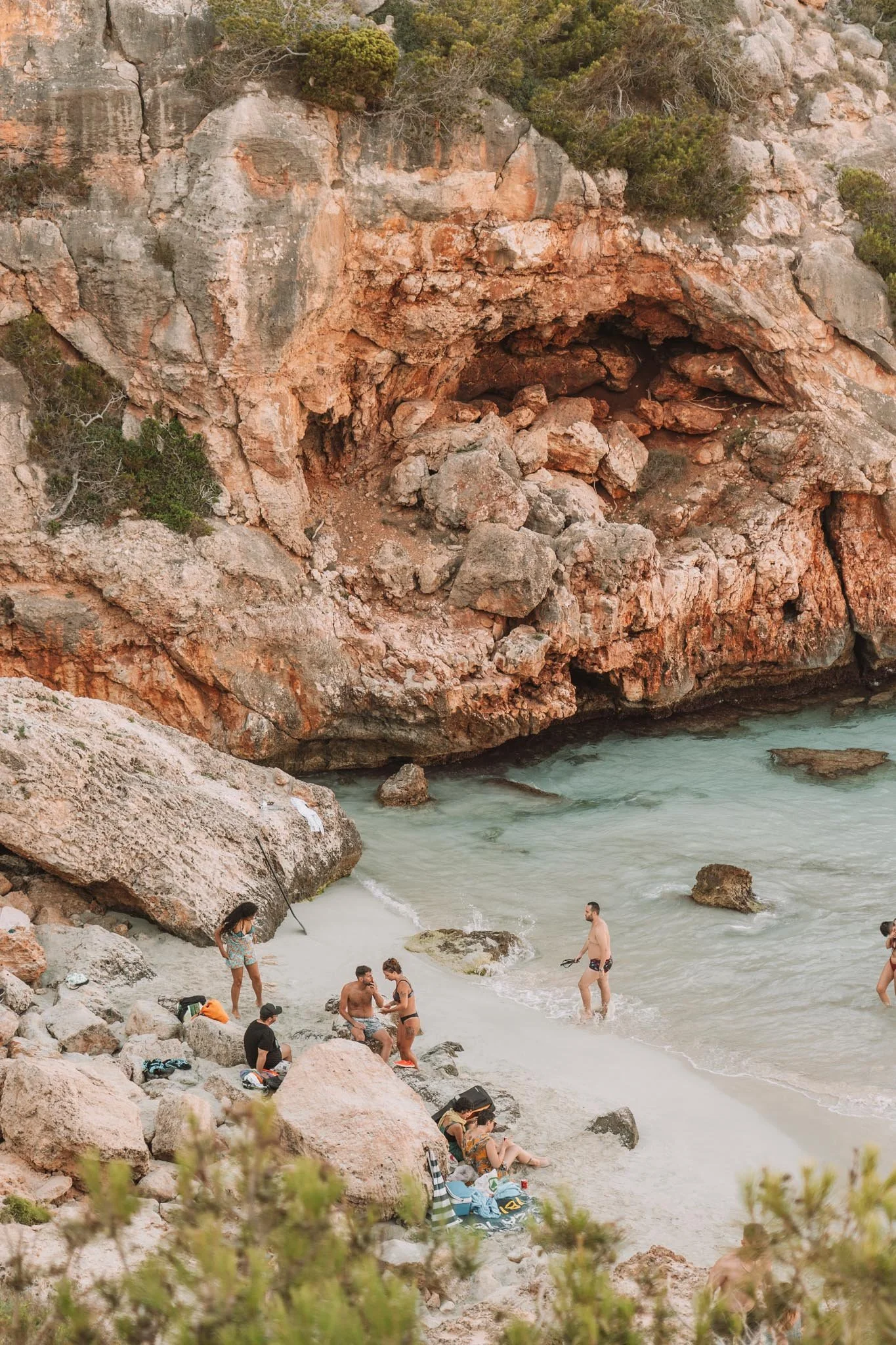
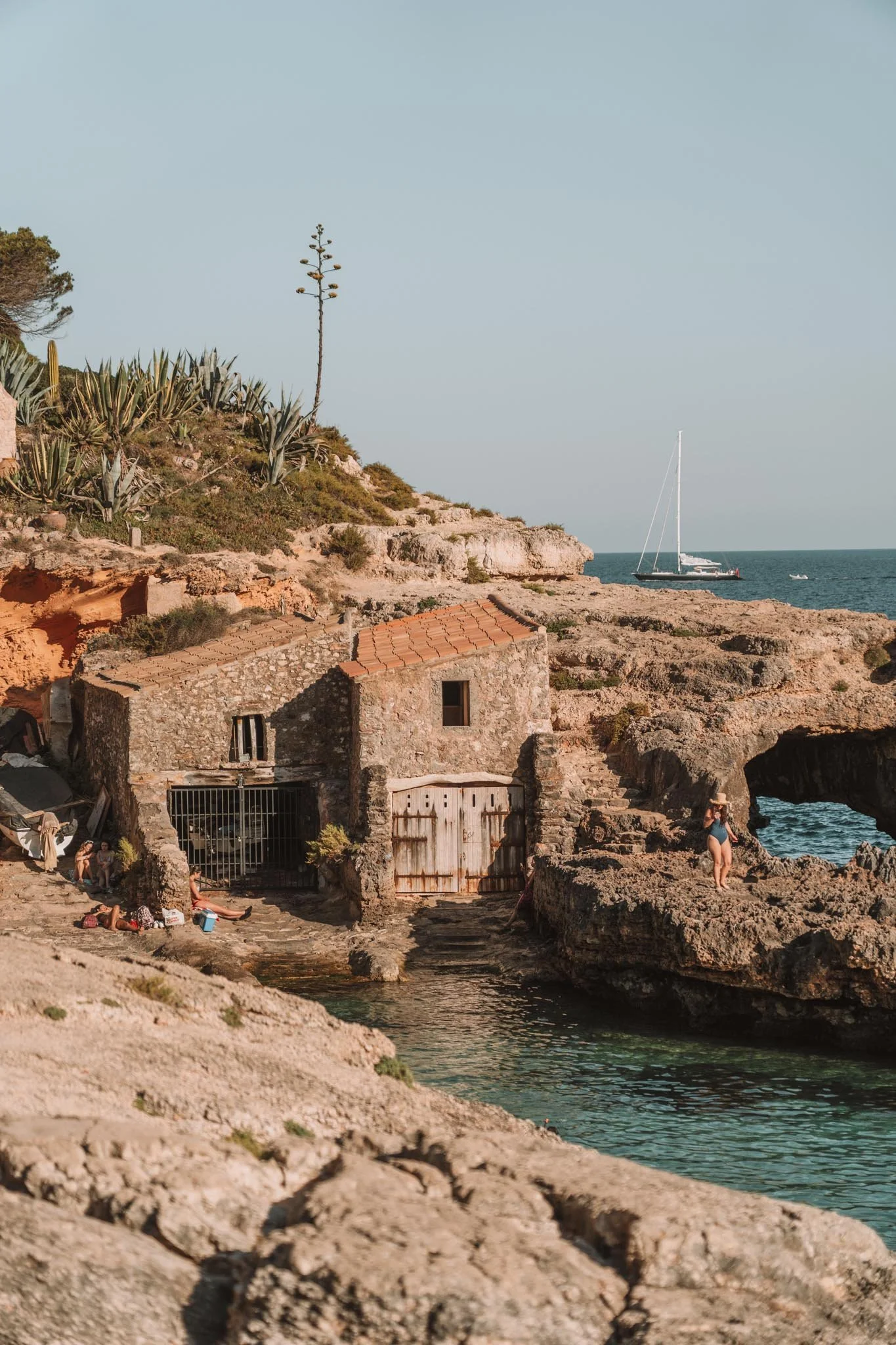
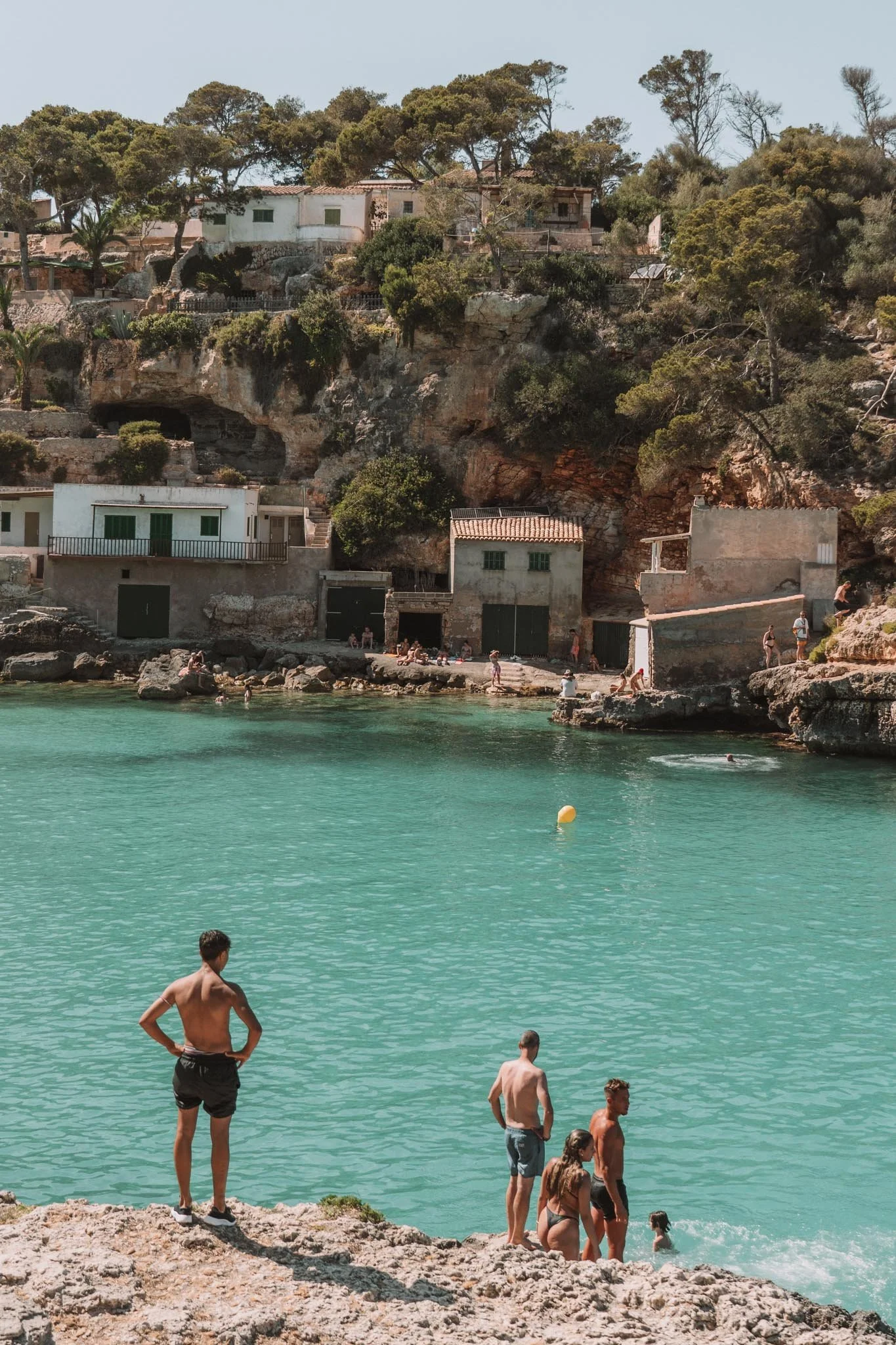
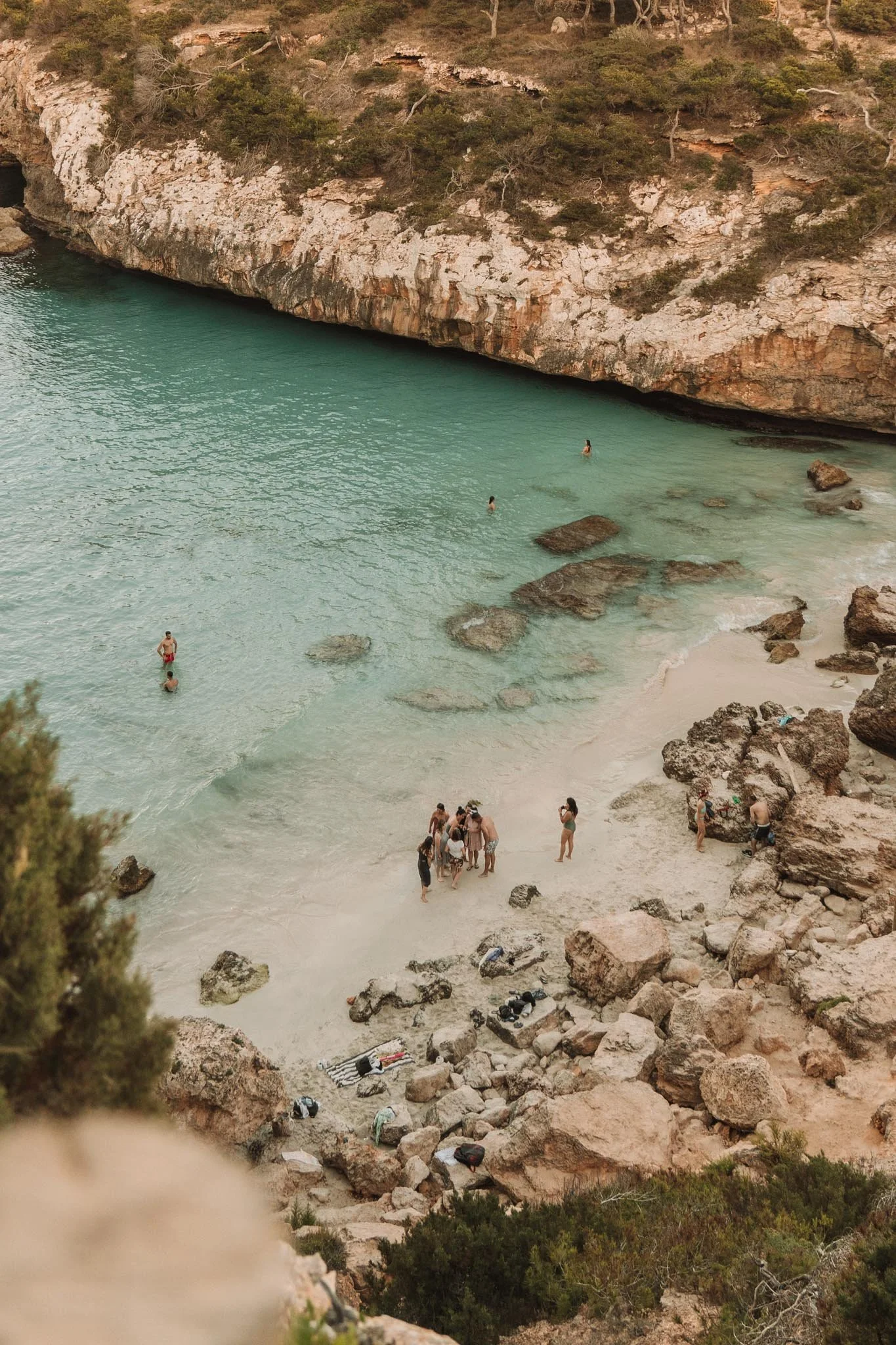
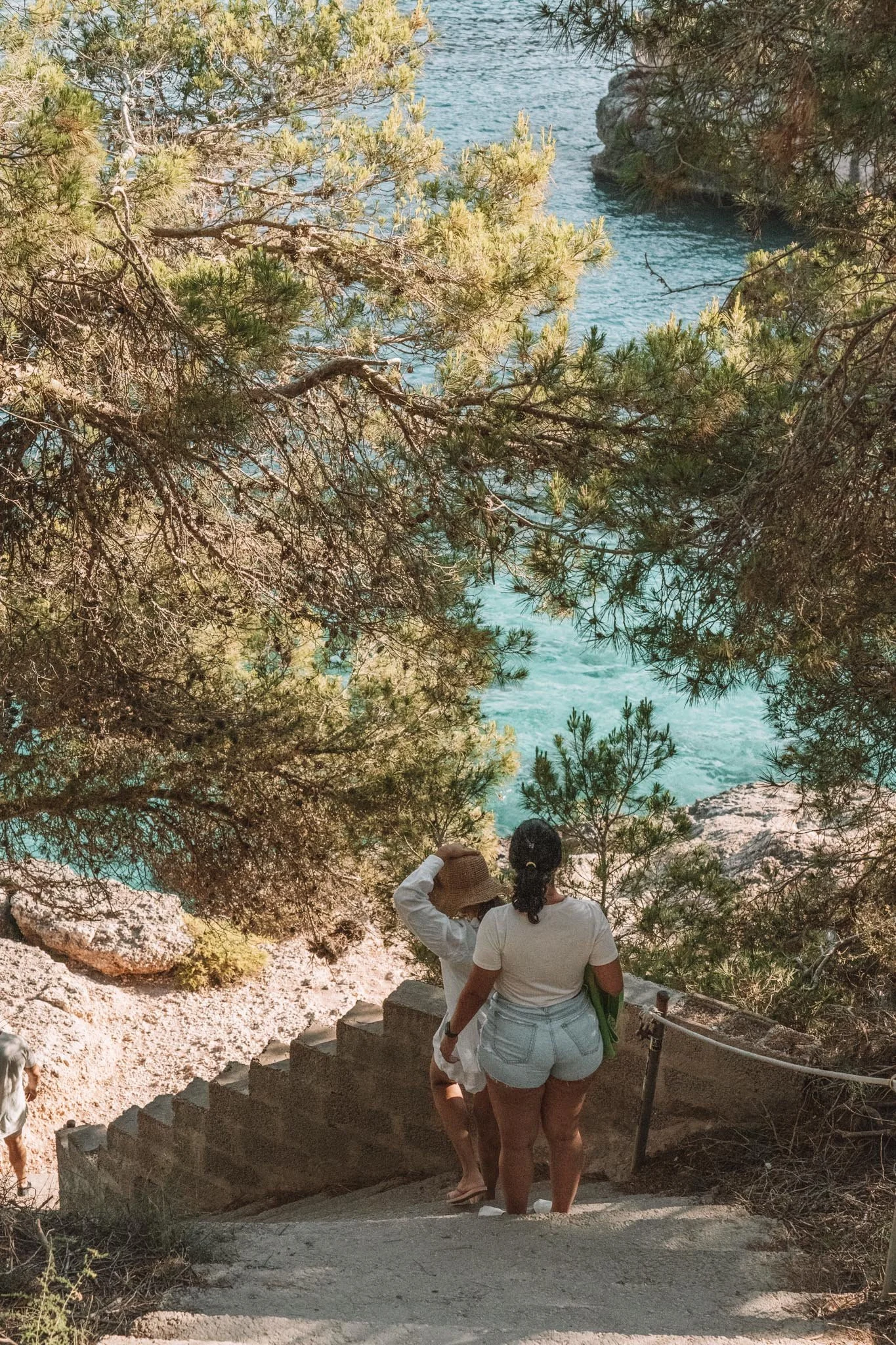
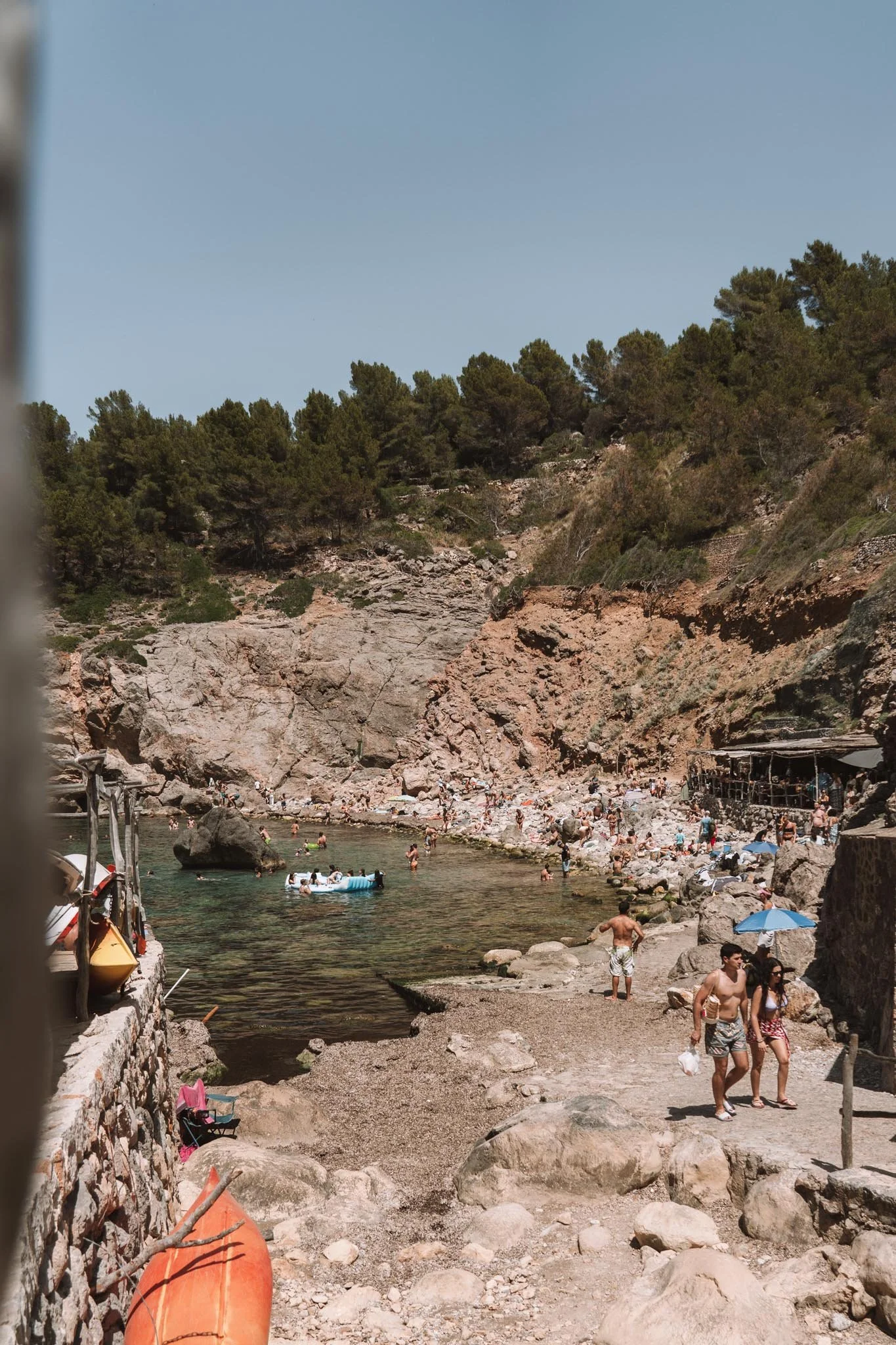
Cala d'es Moro is the one everyone's seen on Instagram, and it's worth the hype, but only if you go early. There's limited parking and a short walk down to the beach, and by midday both the lot and the cove are full. Go before 10am if you want the water to yourself, or at least without a crowd behind you in every photo. If you arrive and it's already packed, Cala S'Almunia right next door has the same rugged, turquoise-water character with noticeably fewer people.
Lunch at Cassai, a rustic spot with the kind of weathered, sun-bleached charm that photographs as well as it tastes. Casual, unfussy, and a good midday reset before the afternoon.
From there, stop at Es Pontàs, a natural rock arch just offshore that's one of the most photographed formations on the island, and continue into Santanyí, a proper Mallorcan town with honey-colored stone buildings and a Wednesday and Saturday market if your timing lines up.
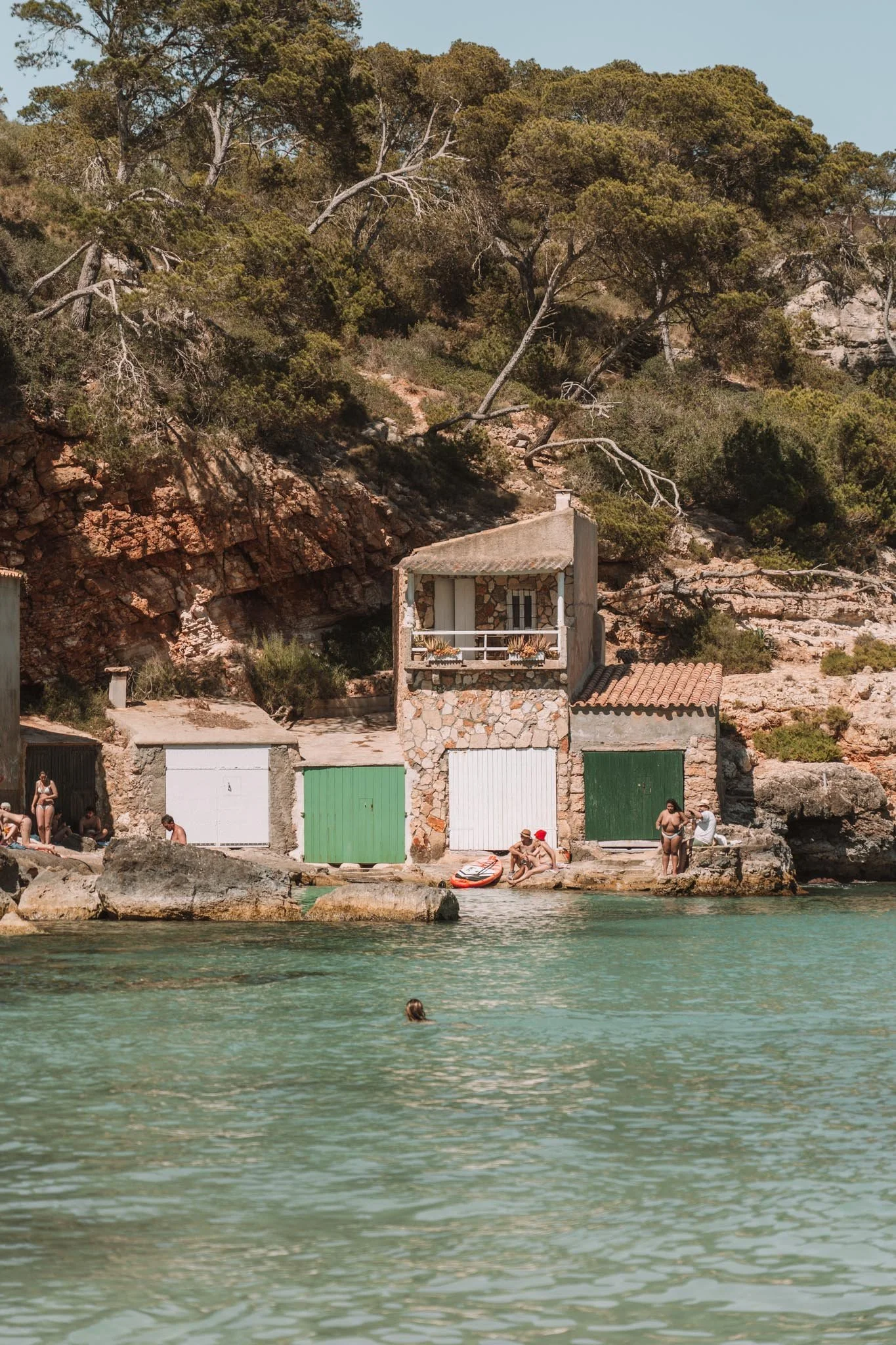
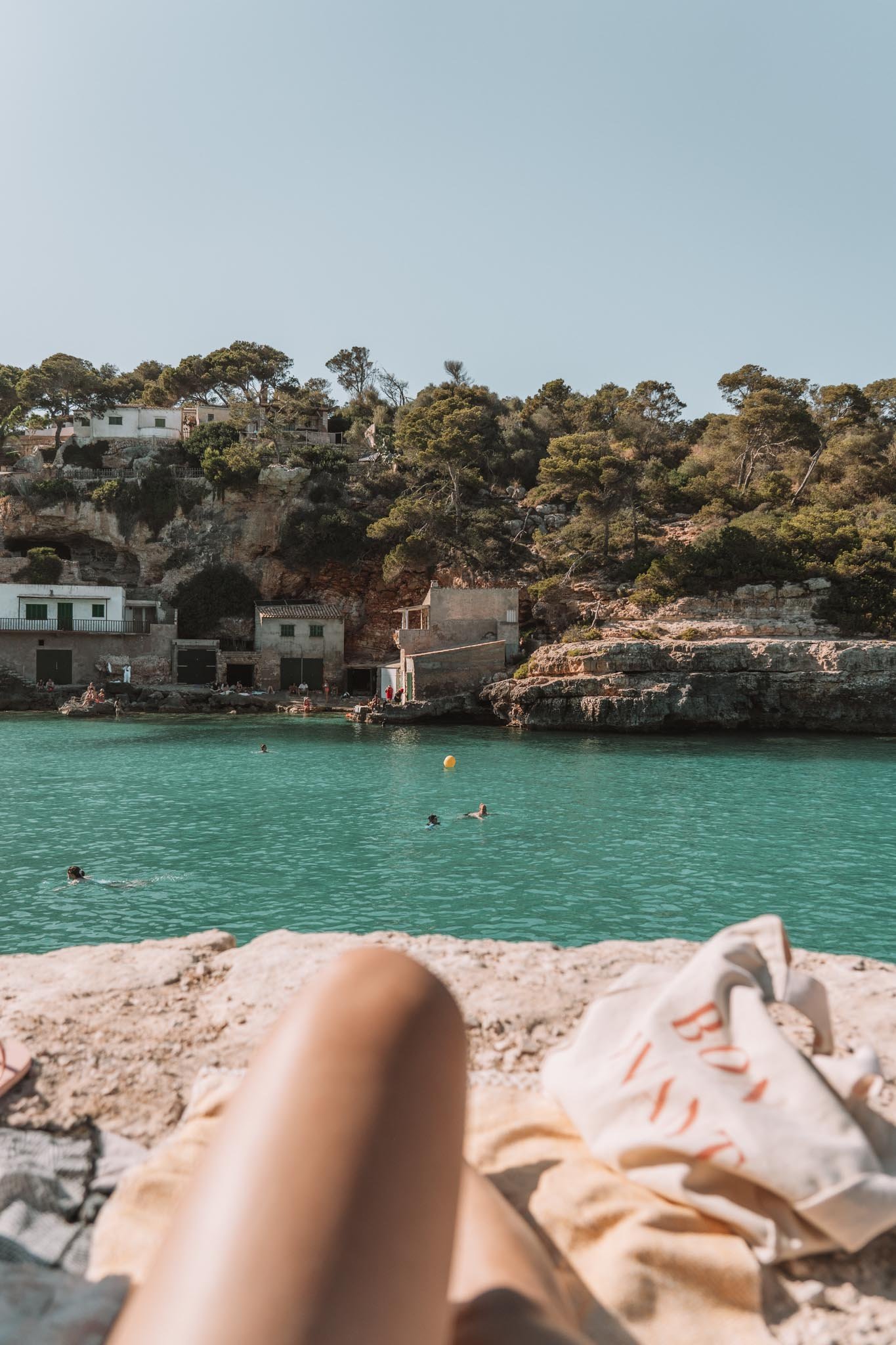
Close the day at Cala Figuera, a working fishing village built around a narrow inlet, with boats still moored right up against the whitewashed houses. It's one of the least "developed" coastal spots on this route and one of the best places on the island for golden hour, the light on the water in the narrow harbor is worth timing your visit around.
Head back to the Airbnb for dinner rather than another restaurant night. After two days of full-on sightseeing, cooking something simple at home is the better move, not a compromise.
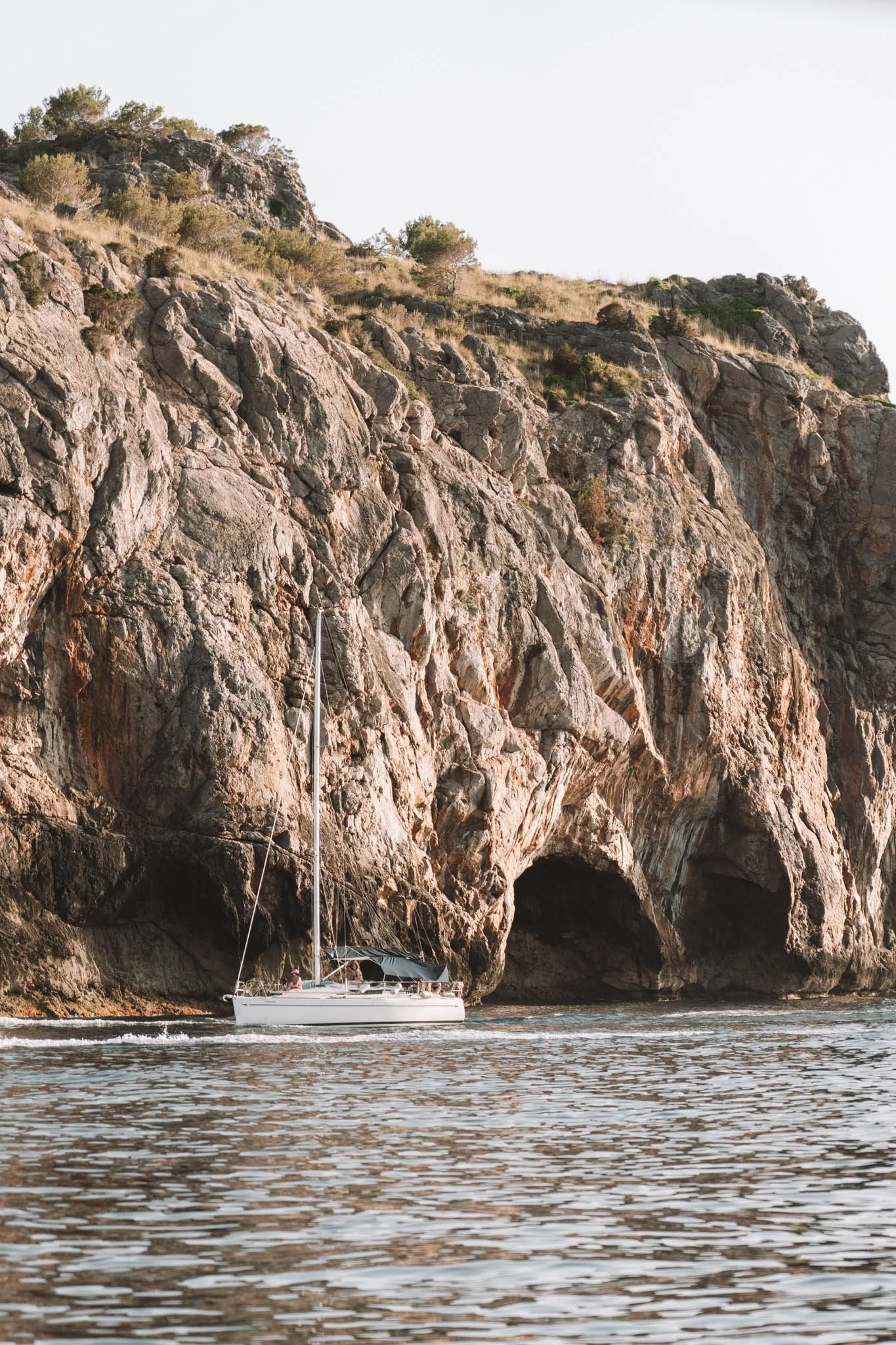
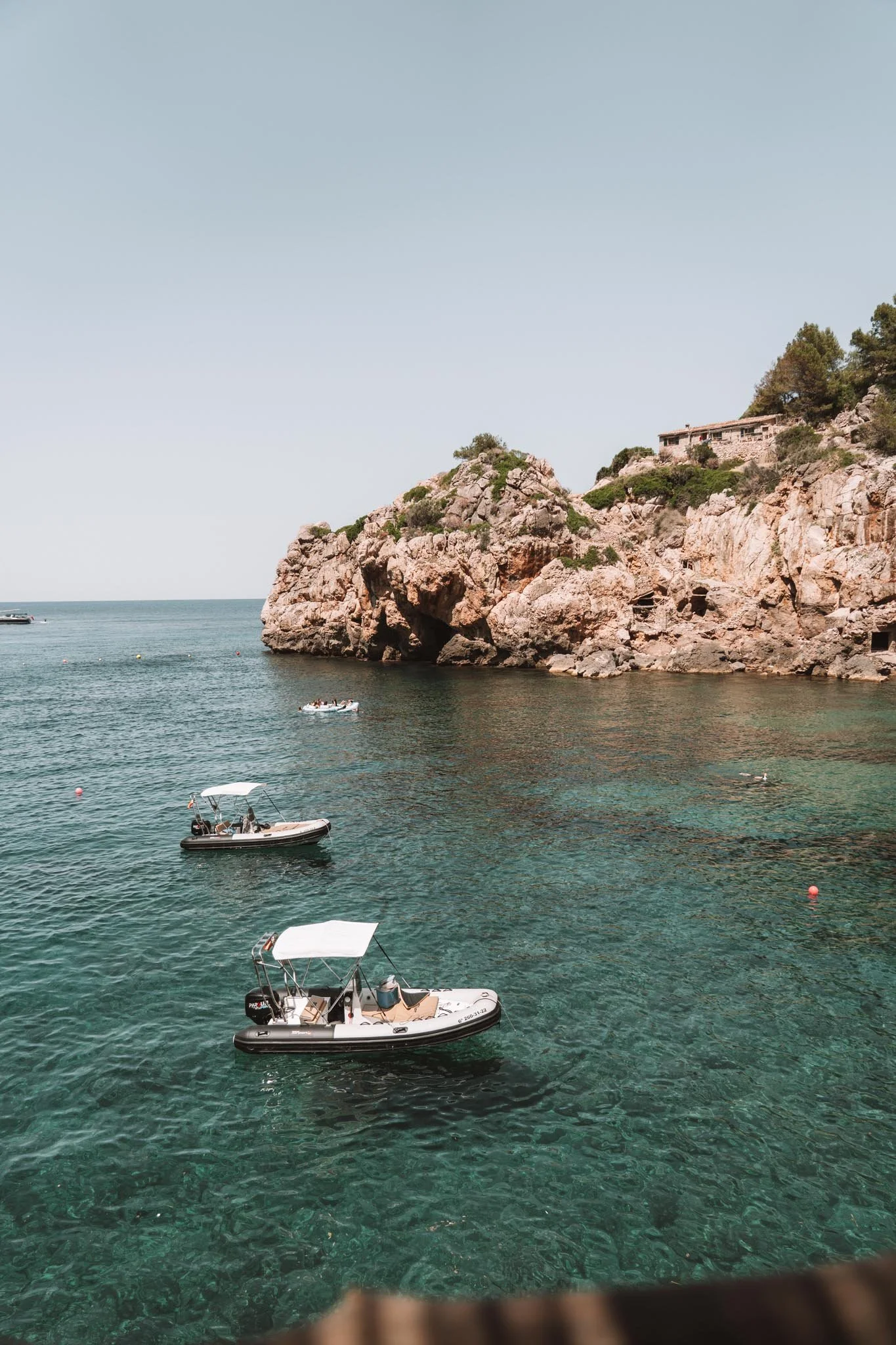
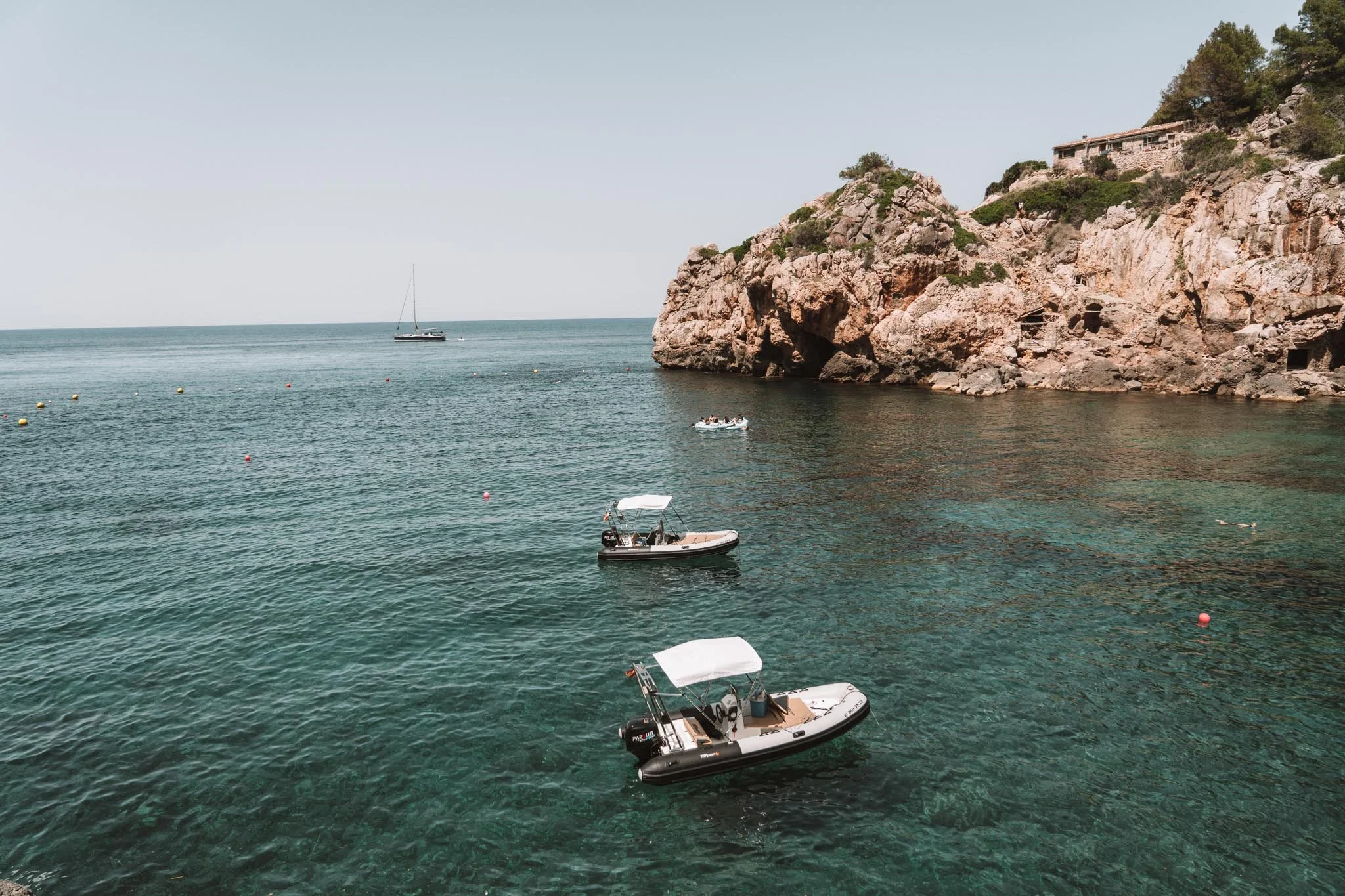
The boat tour version of this day. If you'd rather see this coastline from the water, a boat tour departing from Cala Figuera covers Cala Llombards, Es Pontàs, and Caló des Moro on the same route, plus it adds two coves the driving version doesn't reach at all: Cala Mondragó and Cala Marmols, the latter only accessible by boat or a long hike, and one of the most unspoiled beaches on the island. Tours run 2 to 4 hours depending on the option, book the longer one if you want Cala Marmols included.
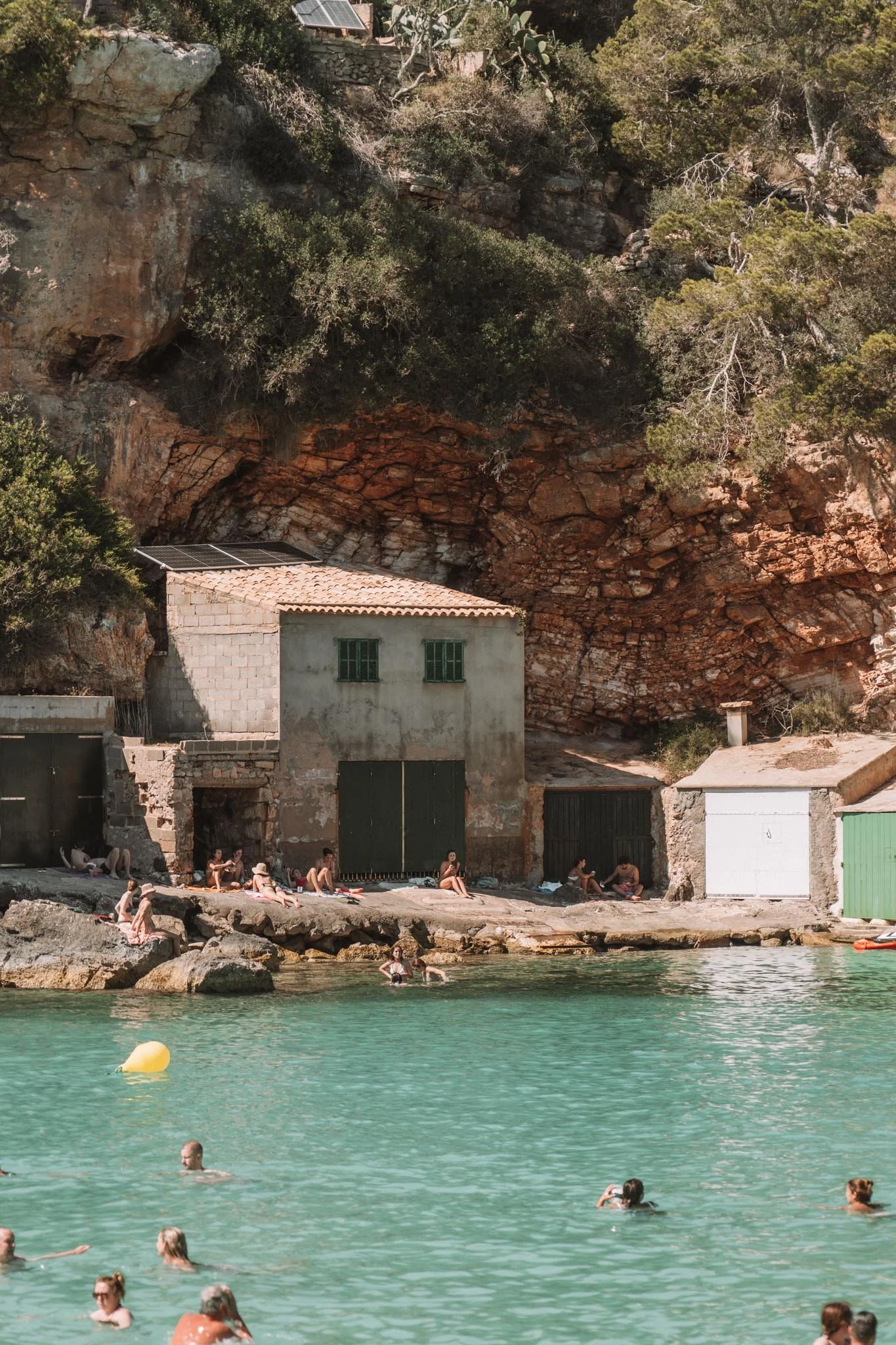
This version flips the day's order: start at Cala Figuera in the morning for the tour, then drive up to Santanyí for lunch and spend the afternoon in town instead of chasing four separate stops by car. It also sidesteps the Cala d'es Moro parking crunch entirely, since you're seeing it from the boat rather than fighting for a spot on land. The trade-off is you lose the slower, walk-around version of Cala d'es Moro and Es Pontàs up close, and you're on a set tour schedule rather than moving at your own pace. If you want both the driving stops in detail and the boat's-eye view of Marmols and Mondragó, that's a good reason to stretch this into a fifth day rather than picking one version.
Day 4: Last Morning and Departure
Keep this morning slow on purpose. If your flight or ferry allows it, use the late morning for anything you missed in Palma, or just enjoy a coffee without a schedule attached to it.
Lunch at El Olivo at La Residencia, the fine-dining restaurant inside the Belmond hotel in Deià. It's a splurge, and it's the right kind of splurge, a genuinely elevated meal in one of the most beautiful settings on the island. If your budget doesn't stretch here, skip it without guilt; nothing else on this itinerary requires it. But if you're closing out the trip and want one memorable last meal, this is it.
Check out by 11am and head to your next stop.
What to Pack For Mallorca
This itinerary swings between mountain roads and beach coves in the same day, so pack for both.
For the driving days (Days 2 and 3):
Comfortable shoes with real grip, some of the cala walks and village streets are uneven stone or steep, narrow paths
Sunglasses and a light jacket or layer, mountain viewpoints like Formentor and the Sa Calobra switchbacks can be windy even when the coast is warm
Motion sickness tablets if you're prone to it, the Ma-2141 to Sa Calobra is one hairpin turn after another for a sustained stretch
A printed or downloaded offline map. Cell service drops in patches through the Tramuntana, and you don't want to be without directions mid-switchback
For the beach and cala days:
Water shoes. Several of these calas, Cala d'es Moro especially, have rocky entry points rather than sand
A dry bag or waterproof phone case if you want photos in the water
More sunscreen than you think you need, and reapply at every stop, the Mediterranean sun is stronger than it feels with the sea breeze
Cash in small bills. Some of the smaller beach-side spots and parking areas near the calas don't take cards
What to Skip If You Only Have 3 Days
If you're working with three days instead of four, don't try to compress all of this, cut a full region instead.
The cleanest cut is dropping the southeast calas (Day 3) and keeping Palma and the Tramuntana. You lose Cala d'es Moro, Es Pontàs, and Cala Figuera, which hurts, but the Tramuntana day is the heart of this itinerary and shouldn't be rushed to make room for a third region.
If the calas matter more to you than the mountain villages, the reverse works too: keep Palma and Day 3, and on your one remaining day, do a shortened version of Day 2 that hits only Deià and Sóller, skipping Sa Calobra and Formentor. You'll miss the single best sunset spot on the island, but you'll actually enjoy the villages instead of rushing through them.
What doesn't work is trying to touch every stop on all three days. You'll spend more time in the car than at any of these places, and the whole point of Mallorca is standing still long enough to actually see it.
If You Have an Extra Two Days
If you can stretch this to six days instead of four, here's what I'd actually add, not just more of the same.
Give the Tramuntana a full second day. Instead of cramming Valldemossa, Deià, Sóller, Fornalutx, Sa Calobra, and Formentor into one long day, split it in two. Day one covers Valldemossa, Deià, and Sóller at an actually relaxed pace, with time to sit for a proper lunch instead of watching the clock, and this is also where a sunset boat tour from Port de Sóller fits properly, without competing with a Formentor sunset on the other side of the coast. Day two is dedicated entirely to Sa Calobra, the Torrent de Pareis hike (go deeper into the gorge than a one-day version allows), and Formentor, with a stop in Pollença on the way, a market town with its own hill-climb church worth the 365 steps up to Calvari.
Add a day in the northeast. This itinerary doesn't touch Alcúdia or Port de Pollença at all, and both are worth a full day. Alcúdia's old town has a genuinely well-preserved medieval wall you can walk, and the beaches around the bay (Playa de Muro especially) are some of the widest, calmest stretches of sand on the island, a different character entirely from the rocky southeast calas.
Or add a day toward Es Trenc. If you'd rather stay south, Es Trenc is often called the most beautiful beach on the island, closer to a Caribbean stretch than a typical Mediterranean cove, and it's a natural add-on to the Day 3 route since it's not far from Santanyí. Pair it with a stop in Colonia de Sant Jordi for lunch by the water.
With six days, I'd pick one of the last two options rather than trying to do both, the northeast and Es Trenc are in opposite directions, and turning this into a full loop of the island usually means more driving than actual time at any one place.
Things to Book in Advance
Beyond the restaurants already mentioned, a few activities are worth having lined up before you land rather than figuring out on the ground:
[Recommended tours and activities, boat trips, snorkeling, guided hikes, coming soon]
What to Eat in Mallorca
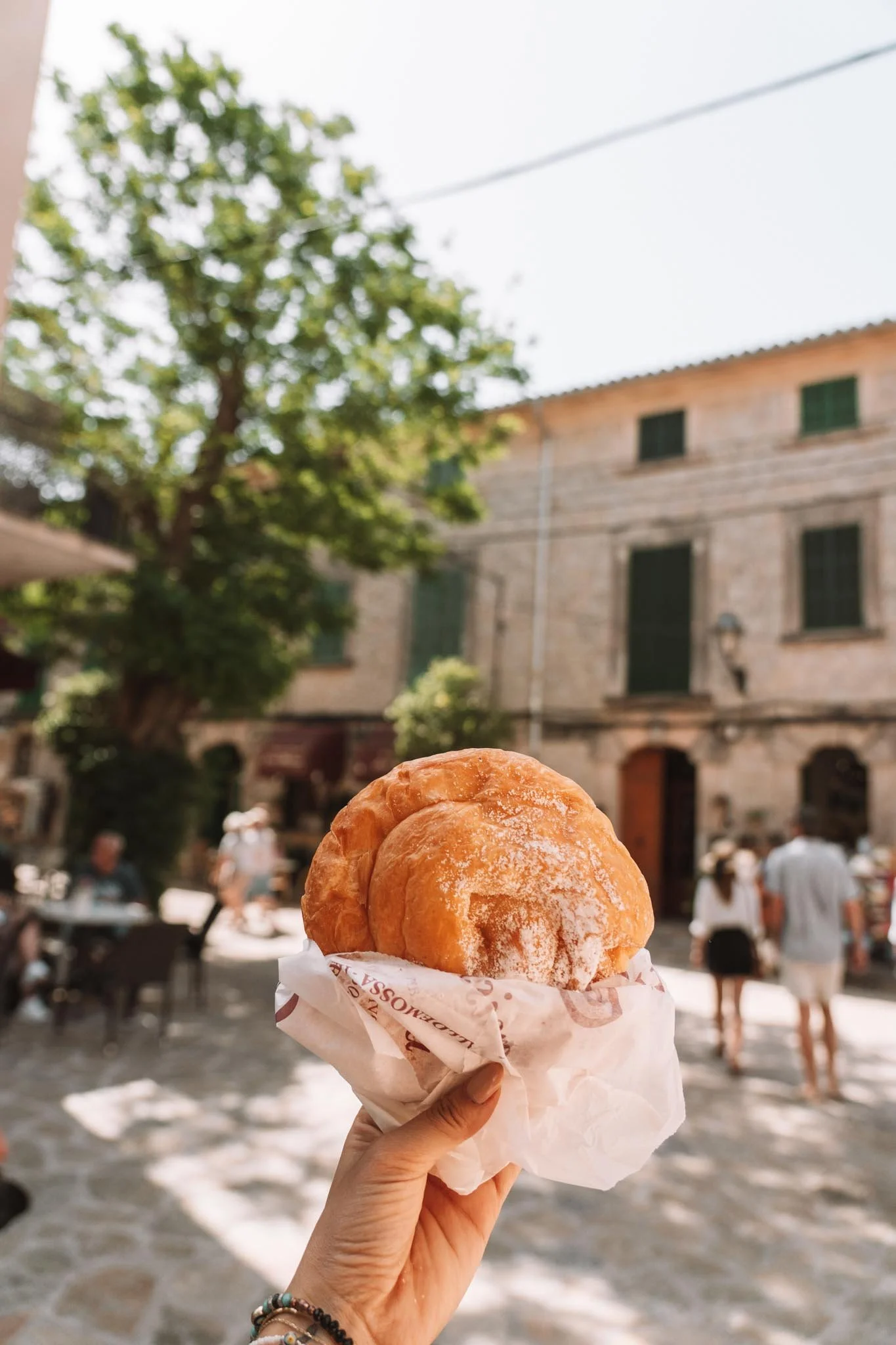
The food here goes well past ensaimadas, though you should absolutely eat those too.
Breakfast, the local way, is usually pa amb oli, thick rustic bread rubbed with ripe tomato, drizzled with olive oil, and topped with local cheese or cured ham. It's simple and it's everywhere, from bakeries to bar counters, and it's a better introduction to the island's food than anything more elaborate. Coffee alongside it is typically a cafè amb llet (the local flat white) rather than anything fussier.
Beyond the ensaimada, the pastry case in a proper Mallorcan bakery has a few things worth seeking out:
Robiols, small crescent-shaped pastries filled with sweet cream, jam, or brossat (a fresh local cheese), traditionally made around Easter but available most of the year
Crespells, star or flower-shaped shortbread cookies, plain and simple, the kind of thing you'll see stacked in bakery windows
Gató mallorquí, a dense almond cake, often served with almond ice cream on the side, this one leans more dessert than breakfast pastry
Cocarrois, a savory pastry filled with spinach, raisins, and pine nuts, closer to a hand pie than a sweet, worth trying if you want something less sugary
Bunyols, small fried dough balls dusted in sugar, traditionally tied to All Saints' Day but sold widely, especially around bakeries and market stalls
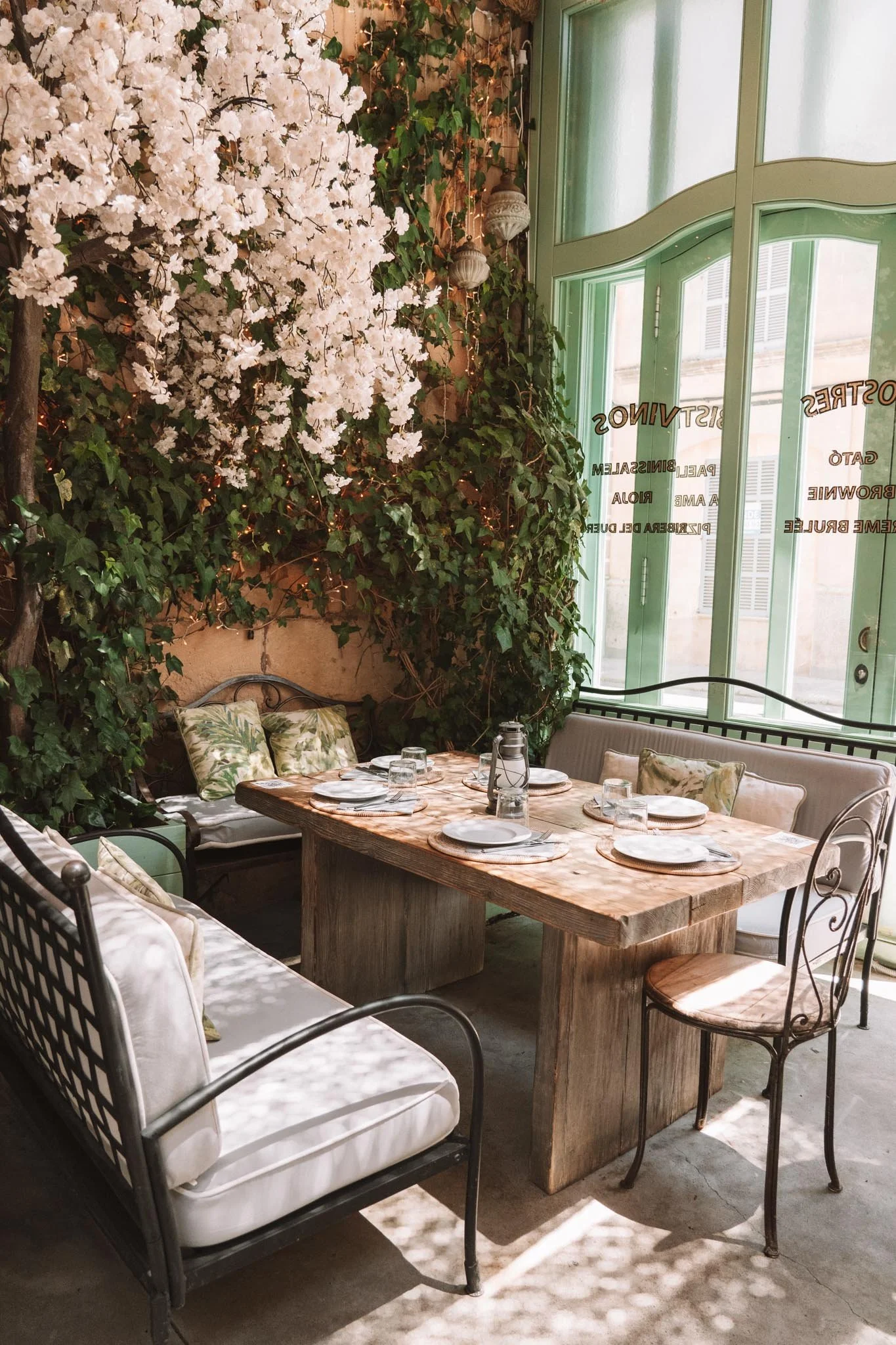
For meals beyond breakfast, a few dishes to actually order rather than default to pizza or a burger:
Tumbet, a layered vegetable dish (potato, eggplant, pepper) baked in tomato sauce, Mallorca's answer to ratatouille and a reliable vegetarian option
Sobrassada, a soft, spreadable cured sausage made with paprika, often served on toast or melted into other dishes, this is one of the island's defining ingredients
Arròs brut, a loose, soupy rice dish with meat and vegetables, hearty and less well-known outside the island than paella but arguably more distinctly Mallorcan
Frit mallorquí, a fry-up of offal, potato, and vegetables seasoned with fennel, an acquired taste but a genuine local staple if you want to eat like a Mallorcan rather than a tourist
Coca de trampó, a flatbread topped with tomato, onion, and green pepper, similar in spirit to a simple flatbread pizza and a good light lunch option
Most of these show up at the restaurants already mentioned in this itinerary, and a local bakery in any of the villages you pass through, Sóller and Santanyí both have good ones, will have several of the pastries above without you needing to hunt for them.
Save This Itinerary
If you want every one of these stops, plus the restaurants, beaches, and calas that didn't make the final cut, pinned to a map you can actually use on the road, the Mallorca Saved Map has all of it dropped in and organized by area. It's the same map I used to build this trip.
And if Mallorca becomes the trip you keep thinking about after you're home, the canvas tote is a good souvenir that isn't a magnet.
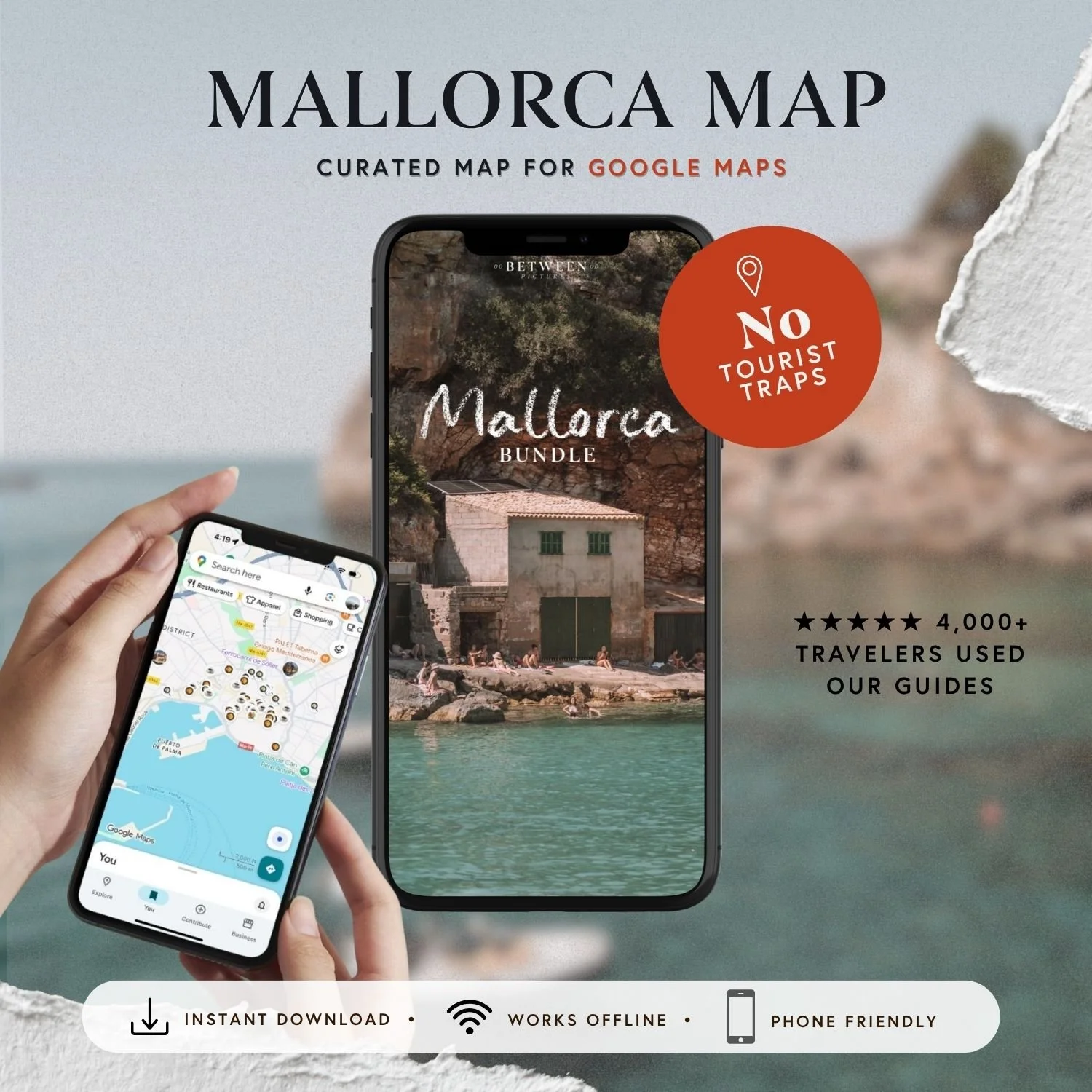
Find All The Best Spots
Discover Mallorca like a local. This Mallorca Curated Maps includes my curated Google Map with the best restaurants, coffee shops, beaches, and brunch places.
FAQ
Is 4 days enough for Mallorca? Yes, for this loop specifically. Four days covers Palma, the Tramuntana coast, and the southeast calas without feeling rushed on any single day, but it doesn't leave room for the east coast or the interior. If you have five or six days, add a second day to the Tramuntana rather than trying to fit in a fourth region.
Do you need a car in Mallorca? For this itinerary, yes. The mountain villages and the southeast calas aren't realistically connected by public transport on a short trip. If you're only doing Palma, you don't need one.
Is Mallorca or Menorca better for a first trip? Mallorca has more variety in a smaller amount of time, mountains, old town culture, and coastline all within a couple of hours of each other. Menorca is quieter and more beach-focused. For a first trip that wants a bit of everything, Mallorca is the better call.
Where should you stay for this itinerary? Palma works, but you don't have to stay in the city itself. Basing yourself in the countryside just outside Palma, or in a central town like Algaida or Santa Maria del Camí, keeps both the Tramuntana day and the southeast day as manageable round trips, often with more space and a pool, without adding real drive time.
Can you really do Sa Calobra and Cap de Formentor in one day? Yes, but it's a long day, Formentor adds well over an hour of driving each way on top of an already full Tramuntana day. This itinerary actually closes Day 2 with a sunset boat tour from Port de Sóller instead of the extra drive to Formentor, which is the better move if you've already spent the day on mountain roads. If Formentor is a must for you, go to Sa Calobra first, early, before the parking lot fills, and treat Formentor as your sunset stop.
How do you get to Mallorca from the US? There are no direct flights. Fly into Madrid or Barcelona and connect to Palma de Mallorca (PMI) on a short domestic flight, about 1 to 1.5 hours. Barcelona generally offers more frequent, cheaper connections than Madrid.
How much does a 4-day trip to Mallorca cost? For two people traveling mid-range, budget around €150-220 per person per day for car rental, accommodation, and meals, not including international flights, which typically run €400-900 per person round-trip from the US.