
Last updated October 2026


3 Days in Barcelona: The Perfect Itinerary From a Local
Three days in Barcelona is enough to see the city's most famous landmarks, explore its historic neighborhoods, and enjoy some excellent food without spending your entire trip rushing between attractions.
I've lived in Barcelona for years, and this is how I'd organize a first visit: grouping attractions by area, leaving time for restaurants and neighborhood walks, and including a few places that deserve more attention than they get.
This itinerary covers the Sagrada Família, Park Güell, Casa Batlló, the Gothic Quarter, El Born, Montjuïc, and some of my favorite places to eat along the way.
Related Posts:
Barcelona 3-Day Itinerary at a Glance
Day 1: Gaudí and the Historic Center
Sagrada Família → Casa Milà → Casa Batlló → Gothic Quarter → Barcelona Cathedral → Palau de la Música Catalana
Day 2: Park Güell, Gràcia, and El Born
Park Güell → Gràcia → Arc de Triomf → Parc de la Ciutadella → El Born
Optional: Recinte Modernista de Sant Pau or Picasso Museum.
Day 3: Paella Cooking Class, Montjuïc or the Beach
Start with a paella cooking class and guided visit to La Boqueria, then Barceloneta neighborhood → Bogatell Beach → Dinner in Poblenou
Want my complete local black book? Get all my secret Barcelona spots, hidden bars, and local-only restaurants in one downloadable guide with Google Maps included! Barcelona PDF Guide
Is 3 Days Enough in Barcelona?
Yes. Three full days in Barcelona is enough to visit the major Gaudí landmarks, explore the Gothic Quarter and El Born, and experience several different neighborhoods. You won't see everything, but you can comfortably cover the highlights with a well-organized itinerary.
If it's your first visit, I'd prioritize Sagrada Família, Park Güell, Casa Batlló, the Gothic Quarter, and time to explore Barcelona's restaurants and neighborhood streets. I put all my go-to spots in a Google Map already saved for you.
Four or five days would allow you to add more museums, beaches, and slower mornings.
Before you start, here are a few things locals want you to know:
Dinner is late here. Eating before 8 PM means you'll be surrounded by other tourists in half-empty restaurants. Locals eat at 8:30–10:00 PM. If that feels too late, aim for 8:00 PM at the earliest. Most good restaurants don't really get going until then.
Tipping is not like the US. Nobody expects a 20% tip. Locals round up the bill or leave a few coins €1–2 on a tapas dinner is perfectly normal and genuinely appreciated. Don't feel pressured by card machines asking for percentages.
Greet people when you walk into a shop. A simple "Hola, buenas" or “Buen dia” when you enter any shop, bar or restaurant is basic courtesy here. Walking in without greeting anyone is considered rude. It's a small thing that makes a big difference.
Sunday shopping. Most shops are closed on Sundays. If shopping is on your list, plan it for a weekday or Saturday. The only exception for big stores like Zara, Oysho, H&M etc. in the summer.
What Should You Book in Advance for Barcelona?
For a three-day trip, these are the attractions I'd organize before arriving:
Sagrada Família: Book a timed-entry ticket, especially during busy travel periods.
Park Güell: Reserve entry to the regulated visitor area.
Casa Batlló: Book ahead if you plan to visit the interior.
Picasso Museum: Reserve ahead if it's an essential stop on your itinerary.
Popular restaurants: Make reservations for places you particularly want to try.
I wouldn't book every hour of your trip. Leave some flexibility for exploring neighborhoods, stopping for coffee, and enjoying Barcelona without constantly checking the time.
If you are wondering where to stay in Barcelona, make sure to check out my post Where to Stay in Barcelona for details of each neighborhood.


Day 1: Gaudí Icons, Sagrada Família & the Gothic Quarter
Start your first day in Barcelona with two of Gaudí's most famous landmarks before heading into the historic center for an afternoon of narrow medieval streets, beautiful architecture, and excellent food.
I've organized the day so you're not constantly crossing the city. You'll begin at Sagrada Família, continue toward Passeig de Gràcia to see Casa Milà and Casa Batlló, and finish in the Gothic Quarter. It's a full day, but there's enough time to enjoy the attractions without rushing from one to the next.
9:00 AM — Sagrada Família
Getting there: Take metro L2 or L5 to Sagrada Família station, located right beside the basilica. If you're staying near Passeig de Gràcia, allow approximately 25–30 minutes to walk, depending on your hotel's location. From Diagonal station, you can also take L5 directly to Sagrada Família.
Duration: 1.5–2 hours, including time for photographs and the museum.
Admission: €26 for standard entry, €30 with a guided tour, or €36 with tower access.
There's nothing quite like seeing Sagrada Família for the first time. Even after living in Barcelona for years, I still stop and stare whenever I walk past it. Gaudí took over the project in 1883, and construction has continued long after his death.
The interior is what makes it extraordinary. The branching columns resemble a forest, while sunlight streams through the stained-glass windows, filling the basilica with color that changes throughout the day.
I'd recommend visiting in the morning, especially if you have a full day of sightseeing planned. An early ticket also leaves you plenty of time to explore Passeig de Gràcia afterward.
Booking tips:
Reserve your tickets in advance. Sagrada Família is one of Barcelona's most popular attractions, and desirable entry times can sell out. Tickets are generally released around two months ahead, so book once your travel dates are confirmed.
Choose the right ticket. Standard admission already includes the official audio guide. A guided tour is a good option if you'd prefer someone to explain the architecture and symbolism in person.
Tower access is optional. For an extra fee, you can visit one of the towers in addition to the basilica. The views are lovely, but I wouldn't consider it essential. You'll take a lift up and descend via stairs, so it's not suitable for everyone.
Take a look at the Nativity façade. This is the side facing Carrer de la Marina, where individual visitors enter. Its intricate sculptures are particularly beautiful in the morning light.
Arrive about 15 minutes before your entry time. You'll need to pass through security, and entry is tied to your reserved time slot.
Download the official app beforehand. The included audio guide is accessed through your phone, so bring headphones.
Important: Sagrada Família opens at 9:00 AM Monday through Saturday, but at 10:30 AM on Sundays. If Day 1 falls on a Sunday, book a 10:30 AM entry and shift the rest of your morning accordingly.
My recommendation: For most first-time visitors, the standard €26 ticket is sufficient. The interior is the real highlight, and I'd rather spend the extra time exploring the basilica than rushing through a tower visit just to fit everything into one morning.
Next stop: Casa Milà and Casa Batlló on Passeig de Gràcia. Allow approximately 25–30 minutes to walk from Sagrada Família to Casa Milà, or take L5 from Sagrada Família to Diagonal and walk south along Passeig de Gràcia. Casa Batlló is about another 8–10 minutes farther down the avenue.
If you're planning to visit Casa Batlló's interior, I'd book an entry around 12:00 PM or later, rather than 11:00 AM, to allow enough time for Sagrada Família and the journey between them.
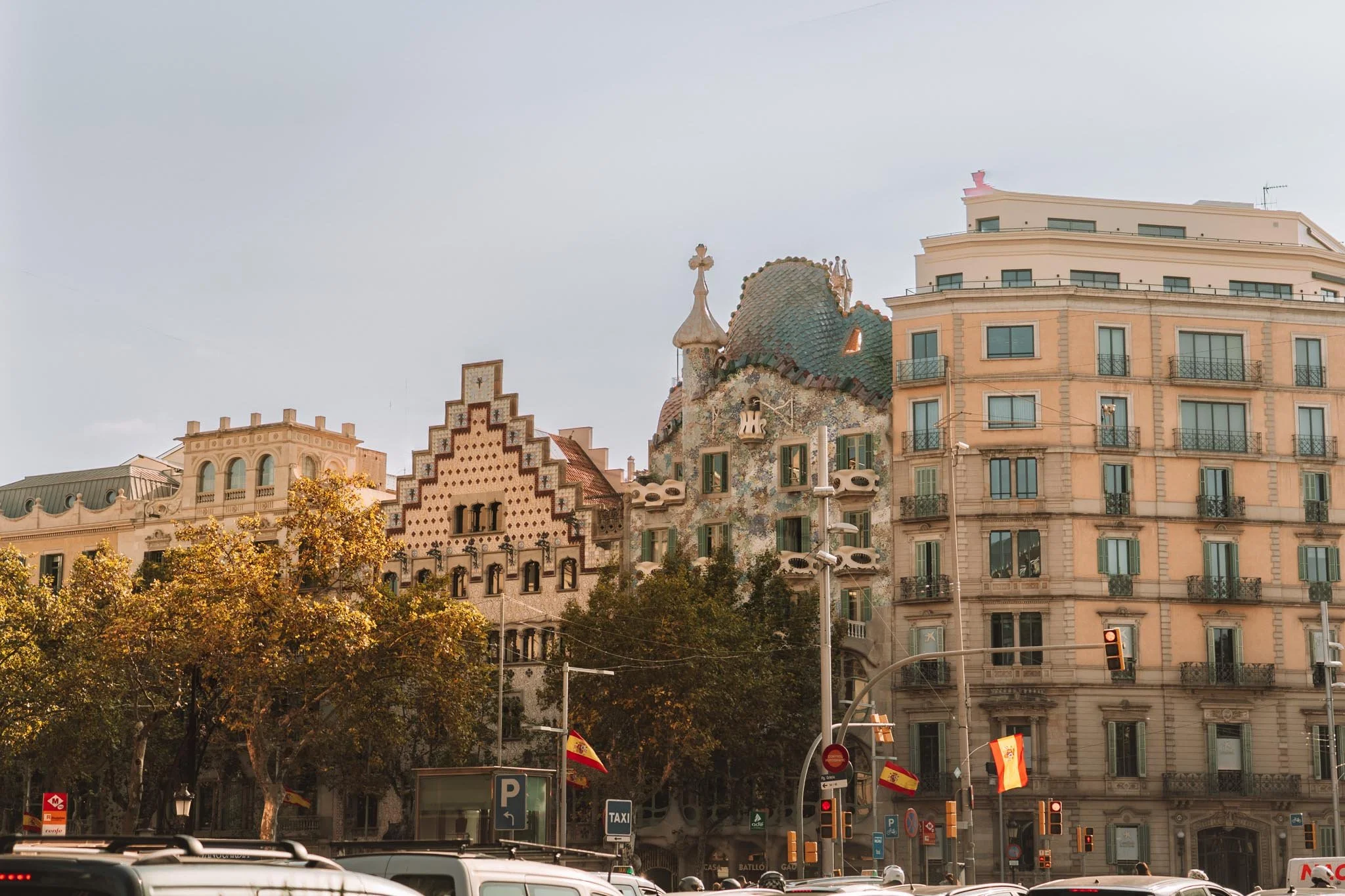
11:30 AM — Casa Milà & Casa Batlló on Passeig de Gràcia
Getting there from Sagrada Família: Walk approximately 25–30 minutes through Eixample to Casa Milà, or take metro L5 from Sagrada Família to Diagonal and walk about 5 minutes to the building. From there, continue south along Passeig de Gràcia to Casa Batlló, approximately 7–10 minutes away.
Duration: 15 minutes to admire Casa Milà from outside, followed by approximately 1–1.5 hours inside Casa Batlló.
Passeig de Gràcia is one of Barcelona's most beautiful avenues, lined with Modernist architecture, elegant buildings, and designer boutiques. Two of Gaudí's most famous residential buildings are just a short walk apart, making them easy to visit together.
Casa Milà (La Pedrera)
Start at Casa Milà, also known as La Pedrera. Its undulating stone façade and wrought-iron balconies make it one of the most recognizable buildings in Barcelona.
For this three-day itinerary, I'd admire it from the street rather than go inside. The rooftop is impressive, but visiting both Gaudí houses on the same morning would leave you with little time for the Gothic Quarter later.
If you have an extra day in Barcelona or are particularly interested in architecture, the interior is worth considering.
Casa Batlló
Continue down Passeig de Gràcia to Casa Batlló. Of the two houses, this is the one I'd prioritize visiting inside on your first trip.
The dragon-like rooftop, bone-shaped columns, and central light well that shifts from deep blue to lighter shades as you descend are extraordinary. It's one of the strangest and most beautiful buildings I've visited, and somewhere I love taking friends when they come to Barcelona.
The visit is self-guided, so you can explore at your own pace. Allow at least an hour, or a little longer if you enjoy photography and want to take your time.
Booking tips for Casa Batlló:
Reserve a timed-entry ticket in advance. Popular times can sell out, especially during weekends and summer. I'd book as soon as your travel dates are confirmed.
Aim for a 12:00–12:30 PM entry. This gives you enough time to visit Sagrada Família, travel to Passeig de Gràcia, and admire Casa Milà without rushing.
The 10D Experience is included in the standard visit. You don't need to purchase a separate upgrade just for the immersive elements. Higher ticket tiers offer additional spaces or experiences, so compare what's included before paying more.
Allow 1–1.5 hours inside. If you're particularly interested in Gaudí's architecture or photography, give yourself closer to 90 minutes.
Don't worry about photographing the façade before your visit. You can return outside afterward, and the building looks beautiful at different times of day.
My recommendation: Visit Casa Milà from the outside and spend your money on Casa Batlló's interior. You'll get to experience two of Gaudí's most famous buildings without turning your entire first day into a marathon of ticketed attractions.
Next stop: The Gothic Quarter. From Casa Batlló, walk approximately 15–20 minutes down Passeig de Gràcia and through Plaça de Catalunya toward the historic center. This is also a convenient time to stop for lunch before exploring the Gothic Quarter in the afternoon.
1:30 PM — Lunch in Eixample
Duration: 1–1.5 hours, depending on the wait.
After visiting Casa Batlló, stop for lunch before heading into the Gothic Quarter.
Two reliable options nearby are Cerveseria Catalana (Carrer de Mallorca, 236) and Vinitus (Carrer del Consell de Cent, 333). Both are popular for traditional tapas, with extensive menus and a lively atmosphere.
Cerveseria Catalana is approximately a 10-minute walk north of Casa Batlló, while Vinitus is just a few minutes away. Both are good options, although I'd choose Vinitus for this itinerary because it's closer and requires less backtracking.
Neither generally accepts reservations, so expect a possible wait, especially during peak lunch hours. I'd allow at least an hour for lunch rather than trying to rush through it.
After lunch: Continue south along Passeig de Gràcia toward Plaça de Catalunya, then walk into the Gothic Quarter. Along the way, take time to appreciate Eixample's wide avenues, chamfered corners, and beautiful Modernist architecture.


3:00 PM — Plaça de Catalunya & La Rambla
Walking distance from lunch: Approximately 10–15 minutes from Vinitus, heading south along Passeig de Gràcia.
Duration: 20–30 minutes.
Continue down Passeig de Gràcia to Plaça de Catalunya, where Eixample meets Barcelona's historic center. It's one of the city's busiest squares and a useful landmark for getting your bearings.
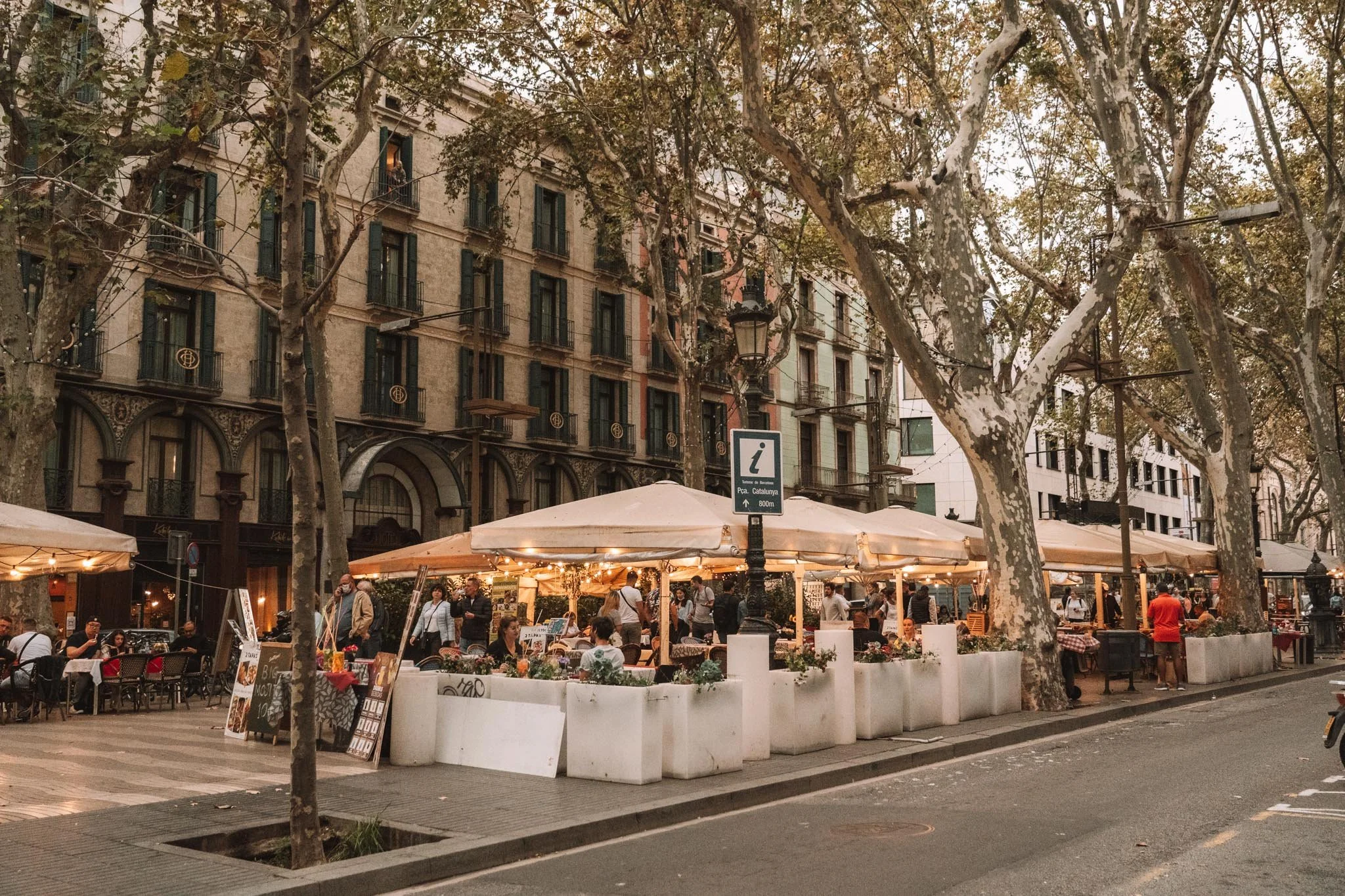
From here, walk down La Rambla, Barcelona's famous pedestrian boulevard. It's crowded, touristy, and not somewhere I'd spend much time, but I still think it's worth seeing once on your first visit.
Keep an eye on your belongings, particularly in crowded areas. Pickpocketing is a problem here, so avoid keeping your phone in your back pocket or leaving your bag unattended.
What I'd skip: The restaurants directly on La Rambla. Most cater heavily to tourists, and you'll find much better places to eat a few streets away. I'd also avoid buying souvenirs from unauthorized street vendors.
My recommendation: Walk just the upper section of La Rambla, then turn left into the Gothic Quarter around Carrer de Santa Anna or Carrer de la Portaferrissa. You'll leave the busiest part of the boulevard behind and find yourself among the narrow streets of the old city.
Next stop: Barcelona Cathedral and the Gothic Quarter, approximately 5–10 minutes on foot from the upper section of La Rambla.
3:30 PM — Explore the Gothic Quarter (Barri Gòtic)
Getting there from La Rambla: Turn left onto Carrer de Santa Anna or Carrer de la Portaferrissa from the upper section of La Rambla. From there, it's approximately 5–10 minutes on foot to Barcelona Cathedral.
Duration: 1–1.5 hours independently, or approximately 2 hours with a guided tour.
The Gothic Quarter is one of my favorite parts of Barcelona to explore on foot. It's a maze of narrow streets, hidden squares, Roman ruins, and medieval buildings, with the cathedral occasionally appearing between the rooftops.
Some of the best moments here happen when you stop following a map. But there are a few places I'd make a point of seeing: Plaça de Sant Felip Neri, a beautiful, quiet square with a complicated history; Plaça del Rei, surrounded by medieval buildings; and Plaça de Sant Jaume, home to Barcelona's City Hall and the Palau de la Generalitat.
Barcelona's history stretches back more than 2,000 years, and you can still see traces of the Roman city throughout the neighborhood. Ancient walls stand alongside medieval buildings, while centuries-old streets are now filled with shops, restaurants, and cafés.
You can easily explore independently, but if you're interested in the history behind what you're seeing, a guided walking tour is worthwhile.
If you book a tour:
Choose a small-group experience when possible. It's much easier to navigate the narrow streets and hear your guide.
Allow approximately 2 hours, depending on the tour.
Book ahead during busy travel periods, particularly if you want a specific departure time.
Keep in mind that a two-hour tour will push the rest of your afternoon later. I'd skip some of the additional stops below rather than rush through everything.
Next stop: Barcelona Cathedral, located in the heart of the Gothic Quarter. If you've already explored the cathedral square during your walk, you can continue toward Palau de la Música Catalana instead.


4:00 PM — Barcelona Cathedral
Getting there: The cathedral is in the heart of the Gothic Quarter, so it's easy to include while exploring the neighborhood. I'd plan your walk to finish at Pla de la Seu, the square in front of the cathedral.
Duration: 30–45 minutes for an interior visit, or 10–15 minutes to admire the exterior.
Barcelona Cathedral is one of the most impressive buildings in the Gothic Quarter, with its soaring Gothic interior and beautiful cloister tucked away from the busy streets.
The cloister is my favorite part. It's a peaceful courtyard filled with palm trees, a small pond, and 13 white geese, traditionally associated with the age of Santa Eulàlia when she was martyred. It's a lovely contrast to the crowded streets outside.
Practical information: Standard tourist admission is currently €16, with access to the visitor areas included in your ticket. Visiting hours vary depending on the day, and religious services can affect access, so check the cathedral's official website before your visit.
My recommendation: If you've already visited Sagrada Família and Casa Batlló earlier in the day, I wouldn't consider another paid interior essential. The cathedral is beautiful from outside, and you can still appreciate its architecture and the surrounding Gothic Quarter without purchasing a ticket.
Next stop: Palau de la Música Catalana, approximately 10 minutes away on foot.
5:15 PM — Palau de la Música Catalana
Walking distance from Barcelona Cathedral: Approximately 10 minutes northeast, crossing Via Laietana into the Sant Pere neighborhood.
Duration: 15–20 minutes to admire the exterior, or approximately 50–60 minutes if you book an interior visit.
The Palau de la Música Catalana is one of Barcelona's most beautiful Modernist buildings and a UNESCO World Heritage Site. Designed by Lluís Domènech i Montaner, the concert hall is covered in intricate mosaics, sculptures, colorful tiles, and elaborate architectural details.
The façade alone is worth the short detour, particularly the columns and mosaics along Carrer de Sant Pere Més Alt. It's one of those buildings you could walk past several times and still notice something new.
But the real highlight is inside. The concert hall has an extraordinary stained-glass skylight, ornate balconies, and colorful decorative details covering almost every surface. It's one of my favorite interiors in Barcelona.
You can visit the Palau on a self-guided or guided tour, depending on availability, or attend a concert. If you love architecture, I'd absolutely recommend seeing the interior at some point during your trip.
My recommendation: For this three-day itinerary, admire the exterior and save the interior for another day. You've already had a full day of sightseeing, and it's worth experiencing the concert hall without rushing.
Worth knowing: If you'd like to attend a performance, check the concert calendar in advance. Ticket prices vary by event, and some concerts sell out well ahead of time.
Next stop: Head toward El Born or the Gothic Quarter for dinner, both within walking distance.
8:00 PM — Dinner in the Gothic Quarter
You've earned it. The Gothic Quarter is full of tourist traps but there are a handful of places that are genuinely excellent. These are the ones I send friends to.
Espai Quera — My favourite on this list and the most unique. It's a bookstore that also serves traditional tapas - shelves of books, low lighting, excellent food. Nobody else will have recommended this to you. Go.
La Sosenga — Traditional Catalan through and through. If you want one genuinely authentic Catalan dining experience on this trip, this is the place to have it.
Brugarol — A more culinary experience without breaking the bank. Their tasting menu is the way to go ! Cosy atmosphere, attentive service, tapas with a Japanese touch.
My recommendation: For your first night in Barcelona, I'd choose Espai Quera for its unique bookstore setting or La Sosenga for a more traditional Catalan dining experience. If you're looking for something more elaborate, Brugarol is another excellent option in the Gothic Quarter.
Day 1 in Barcelona Overview
| Time | Stop | Duration | Cost |
|---|---|---|---|
| 9:00 AM | Sagrada Família | 1.5–2 hrs | From €26 pp |
| 11:30 AM | Casa Milà (exterior), then Casa Batlló (interior around noon) | Approx. 2 hrs including walking | Casa Milà exterior free; Casa Batlló ticket varies |
| 1:30 PM | Lunch in Eixample — Vinitus or Cerveseria Catalana | 1–1.5 hrs | Approx. €20–35 pp |
| 3:00 PM | Plaça de Catalunya & upper La Rambla | 20–30 min | Free |
| 3:30 PM | Explore the Gothic Quarter — Plaça de Sant Felip Neri, Plaça del Rei & historic streets | Approx. 1–1.5 hrs, including cathedral stop | Free to explore; guided tours extra |
| 4:00 PM | Barcelona Cathedral (within Gothic Quarter walk) | 10–15 min exterior / 30–45 min interior | Exterior free; tourist admission approx. €16 pp |
| 5:15 PM | Palau de la Música Catalana — exterior | 15–20 min | Free outside; interior visits extra |
| 5:45–7:30 PM | Free time in El Born or the Gothic Quarter | Flexible | Free to explore |
| 8:00–9:00 PM | Dinner — Espai Quera, Somsis, La Sosenga or Brugarol | 1–2 hrs | Varies by restaurant and order |
Note: Times are approximate and may vary depending on ticket availability, queues, and your pace. On Sundays, Sagrada Família opens later, so adjust the itinerary accordingly. Book major attractions in advance to avoid unnecessary delays.
Make sure to check out my post on 15 Mistakes To Avoid When Visiting Barcelona
Day 2: Park Güell, Gràcia, Recinte Modernista de Sant Pau & El Born
Day 2 takes you beyond Barcelona's most famous landmarks and into some of my favorite neighborhoods. You'll start with Gaudí's colorful Park Güell, spend time exploring the independent shops and lively squares of Gràcia, and make your way toward El Born for an afternoon of medieval streets, museums, and beautiful architecture.
If you love Modernist architecture, there's also the option to visit Recinte Modernista de Sant Pau, one of Barcelona's most impressive UNESCO World Heritage Sites. It's a worthwhile addition, but I'd treat it as optional rather than trying to squeeze everything into one day.
This is a day for slowing down a little, exploring the neighborhoods, and enjoying Barcelona beyond its headline attractions.
9:30 AM — Park Güell
Getting there: Park Güell sits uphill from central Barcelona, so I recommend taking a taxi if you want the easiest journey. From central Eixample, allow approximately 15–25 minutes, depending on traffic.
For public transport, take metro L3 to Lesseps or Vallcarca, followed by an uphill walk of approximately 15–20 minutes. Alternatively, bus 24 serves the park area and can be more convenient depending on where you're staying.
Duration: 1.5–2 hours.
Park Güell is one of Gaudí's most extraordinary creations. Between the colorful mosaics, unusual stone structures, and views stretching across Barcelona toward the Mediterranean, it's unlike anywhere else in the city.
Even after visiting several times, I still think it's worth including on a first trip to Barcelona.
The famous mosaic terrace, dragon staircase, Hypostyle Room, and fairytale-like entrance buildings are all part of the ticketed visitor area. You'll need to book a timed-entry ticket in advance to see them.
I recommend visiting as early as possible. The park becomes noticeably busier as the morning progresses, particularly around the terrace and staircase, where everyone stops for photographs.
One thing worth knowing is that Park Güell is no longer divided into a large, freely accessible tourist area and a separate ticketed Monumental Zone in the way older guides describe. General tourist access to the main park is ticketed, although there are surrounding paths and green spaces outside the controlled visitor area.
Booking tips:
Reserve tickets in advance. I'd aim for at least 1–2 weeks ahead, and earlier during peak season or holidays.
Choose a 9:30 AM entry if available. It's a good balance between starting early and having enough time to reach the park from central Barcelona.
Head toward the main terrace early in your visit. It's one of the busiest photography spots, so it's worth seeing before the park gets more crowded.
Wear comfortable shoes. The park has uneven paths, stairs, and changes in elevation.
Allow time to explore beyond the famous mosaics. The stone viaducts, winding paths, and landscaped areas are part of what makes Park Güell special.
My recommendation: Book the standard admission ticket unless you particularly want a guided explanation of Gaudí's design. With 1.5–2 hours, you can see the main highlights without rushing.
Next stop: Walk downhill toward Gràcia, where you'll find some of Barcelona's loveliest neighborhood squares, independent boutiques, and cafés.


11:30 AM — Explore the Gràcia Neighborhood
Walking distance from Park Güell: Approximately 20–30 minutes downhill to central Gràcia, depending on which park exit you use.
Duration: 1–1.5 hours, including the walk from Park Güell.
After Park Güell, make your way downhill into Gràcia, one of my favorite neighborhoods in Barcelona. It's where I like to bring visiting friends when they want to explore somewhere beyond the usual tourist attractions.
Gràcia was once an independent town before becoming part of Barcelona, and it still has a distinct neighborhood feel. The streets are narrower, the buildings are smaller, and you'll find independent boutiques, cafés, traditional shops, and lively squares tucked between residential streets.
Start by making your way toward Plaça de la Virreina, one of the prettiest squares in the neighborhood, with its church, outdoor terraces, and relaxed atmosphere. From there, continue to Plaça del Sol, a popular gathering place, and Plaça de la Vila de Gràcia, recognizable by its distinctive clock tower.
These squares are lovely places to stop for a coffee and take a break after the morning at Park Güell. You don't need a strict sightseeing route here. Part of Gràcia's appeal is simply walking through its streets and discovering little shops and cafés along the way.
My recommendation: Don't rush through Gràcia just to check off another attraction. Give yourself time to explore, browse a few shops, and enjoy the neighborhood before lunch.
Next stop: Stay in Gràcia for lunch before continuing with the afternoon itinerary.


1:00 PM — Lunch in Gràcia
Duration: 1–1.5 hours.
Gràcia has some excellent restaurants, so I'd recommend staying in the neighborhood for lunch before continuing your afternoon.
If you love seafood, Lluritu 2 is a great choice. It's a casual, lively restaurant specializing in fresh fish and shellfish, prepared simply and meant for sharing. It's an excellent spot for a relaxed lunch without anything too formal.
For something more traditional, Taverna El Glop is another excellent option. This neighborhood restaurant serves Catalan cuisine, including grilled meats, traditional dishes, and rice specialties. It's a good place to try some local cooking without committing to a full paella lunch, especially if you're planning to take the paella cooking class on Day 3.
For something quicker: Oz Bakery, near Plaça de la Vila de Gràcia, is a lovely alternative. They also make sandwiches that are good for a casual lunch, although I'd especially recommend stopping for their pastries and coffee.
My recommendation: Choose Lluritu 2 for seafood or Taverna El Glop for a more traditional Catalan meal. Both are great for a leisurely lunch, while Oz Bakery is ideal if you'd rather grab something quick and spend more time exploring Gràcia.
Next stop: Continue toward your afternoon attractions. If you're planning to visit Recinte Modernista de Sant Pau, remember that it requires a detour before heading toward El Born.


Optional: 2:30 PM — Recinte Modernista de Sant Pau
Getting there from Gràcia: Allow approximately 25–35 minutes on foot from central Gràcia, depending on where you have lunch, or take a short taxi ride. The complex is located at the northern end of Avinguda de Gaudí, with Sagrada Família visible at the opposite end of the avenue.
Duration: 1–1.5 hours, plus travel time.
If you love architecture and still have the energy for another major attraction, I'd recommend visiting Recinte Modernista de Sant Pau. Otherwise, skip ahead to El Born and enjoy a more relaxed afternoon exploring the neighborhood.
Sant Pau is one of Barcelona's most impressive Modernist landmarks, yet it receives far less attention than Gaudí's famous buildings.
Designed by Lluís Domènech i Montaner and built in the early 20th century, this former hospital complex is a UNESCO World Heritage Site. It was created around the idea that natural light, fresh air, gardens, and beautiful surroundings could contribute to patients' recovery.
The historic complex consists of beautifully decorated pavilions, landscaped gardens, and underground passageways connecting different buildings. You'll find colorful mosaics, stained glass, sculptures, and intricate ceramic details throughout.
What makes Sant Pau particularly interesting is how different it feels from Gaudí's architecture. After visiting Sagrada Família and Park Güell, seeing Domènech i Montaner's work gives you a broader appreciation of Catalan Modernisme and the architects who shaped Barcelona.
I also love that you can explore the grounds at a relatively relaxed pace. The architecture is spectacular, and there are plenty of beautiful details to photograph without the same concentration of crowds you'll find at Barcelona's most famous attractions.
Booking tips:
Check opening hours before visiting, particularly during winter when the site may close earlier.
Purchase tickets online in advance if you're visiting during a busy period.
Consider the audio guide if you're interested in the history of the hospital and its architecture.
Allow at least an hour for the main highlights, or closer to 90 minutes if you enjoy architecture and photography.
Some of the visit takes place outdoors, so bring sun protection during warmer months.
My recommendation: Sant Pau is absolutely worth visiting, but I wouldn't sacrifice your entire afternoon in El Born to squeeze it in. If you're particularly interested in architecture, include it. Otherwise, head directly to El Born after lunch and save Sant Pau for another trip.


3:00 PM — Arc de Triomf & Parc de la Ciutadella
Getting there from Gràcia: Take metro L4 from Joanic to Urquinaona, then walk approximately 10 minutes to Arc de Triomf. Allow around 20–30 minutes for the journey.
If you visited Recinte Modernista de Sant Pau: A taxi directly to Arc de Triomf is the simplest option, taking approximately 15–20 minutes depending on traffic. You'll likely arrive later, so adjust the afternoon accordingly.
Timing note: If you visited Sant Pau after lunch, you'll likely reach this area closer to 4:30–5:00 PM. I'd recommend choosing either Parc de la Ciutadella or the Picasso Museum rather than rushing through both. If you skipped Sant Pau, you should have time to enjoy both at a more relaxed pace.
Duration: 45 minutes–1 hour.
Start at Arc de Triomf, the beautiful red-brick arch built as the main entrance to the 1888 Barcelona Universal Exposition. It's one of Barcelona's most recognizable landmarks and worth stopping for a few photos before continuing down Passeig de Lluís Companys toward the park.
Just a few minutes away is Parc de la Ciutadella, one of Barcelona's most popular green spaces and a lovely place to slow down after a busy morning.
The highlight is the Cascada Monumental, an elaborate fountain decorated with sculptures and surrounded by greenery. A young Antoni Gaudí contributed to the project early in his career, although the fountain was designed by Josep Fontserè.
You'll also find a small boating lake, palm-lined paths, and the Catalan Parliament building within the park. It's a popular place for locals to walk, picnic, and spend time outdoors, especially on weekends.
Practical note: The park is free to visit. Rowboats are sometimes available to rent on the lake, depending on the season and operating conditions.
My recommendation: Spend most of your time around the monumental fountain and gardens rather than trying to see every corner of the park. You'll still have El Born to explore afterward.
Optional: 4:00 PM — Picasso Museum
Walking distance from Parc de la Ciutadella: Approximately 10–15 minutes west into El Born, along Carrer de Montcada.
Duration: 1–1.5 hours if visiting inside.
If you're interested in art, the Museu Picasso is one of Barcelona's most worthwhile museums, particularly for understanding Picasso's early career.
The museum occupies five adjoining medieval palaces on Carrer de Montcada, one of the most beautiful historic streets in El Born. Even if you decide not to go inside, I'd recommend walking along this street to admire the architecture.
The collection focuses heavily on Picasso's formative years, including the period when he lived and studied in Barcelona. It's fascinating to see his early academic paintings before the artistic styles that eventually made him famous.
One of the highlights is his Las Meninas series, in which Picasso reinterpreted Diego Velázquez's famous painting through dozens of individual works.
My recommendation: Visit the museum if you're particularly interested in Picasso or art history. Otherwise, skip the interior and spend more time exploring El Born's streets, shops, and cafés.
Practical note: The museum is generally closed on Mondays, and opening hours vary seasonally. Book a timed-entry ticket in advance if you plan to visit.
Next stop: Continue exploring El Born, where you'll also find some excellent restaurants and wine bars for dinner.


5:30 PM — Explore El Born
Getting there: If you've visited the Picasso Museum, you're already in El Born. If you've skipped the museum, walk approximately 10–15 minutes from Parc de la Ciutadella toward Passeig del Born.
Duration: Flexible, continuing into the evening.
El Born is one of my favorite neighborhoods in Barcelona, with narrow medieval streets, beautiful historic buildings, independent boutiques, galleries, and some excellent restaurants and wine bars.
Start along Carrer de Montcada, where you'll find the Picasso Museum and several impressive medieval palaces. From there, make your way toward Passeig del Born, one of the neighborhood's main gathering places, then explore Carrer del Rec and the surrounding streets.
This is one of those neighborhoods where I wouldn't follow a strict itinerary. Take your time browsing the shops, wandering down side streets, and stopping somewhere that catches your attention.
Before Dinner — Stop for Vermut
El Born is full of little bars , making it a lovely neighborhood to spend some time before dinner. If you'd like to try a local tradition, order a vermut with olives or a few small bites or simply enjoy a caña (small glass of beer) with a few tapas.
8:00 PM — Dinner in El Born
El Born has no shortage of tapas bars, but one classic that always stands out is El Xampanyet.
Open since 1929, this old-school tapas bar is known for its traditional tapas, house sparkling wine, and lively atmosphere. It's almost always packed, and that's part of the experience.
I'd recommend going earlier in the evening rather than leaving it until 9:00 PM, especially if you want to avoid the busiest period or risk arriving close to closing time. Expect a possible wait, and keep your plans flexible.
It's a Barcelona classic and somewhere I think is worth experiencing at least once.


Day 2 in Barcelona at a Glance
| Time | Stop | Duration | Cost |
|---|---|---|---|
| 9:30 AM | Park Güell | 1.5–2 hrs | Approx. €18 pp |
| 11:30 AM | Walk downhill and explore Gràcia — Plaça de la Virreina, Plaça del Sol & Plaça de la Vila de Gràcia | 1–1.5 hrs including walk | Free |
| 1:00 PM | Lunch in Gràcia — Lluritu 2, Taverna El Glop or Oz Bakery | 1–1.5 hrs | Varies by restaurant |
| 2:30 PM (optional) | Recinte Modernista de Sant Pau — for architecture lovers | 1–1.5 hrs, plus travel | Paid admission; check current price |
| 3:00 PM | Arc de Triomf & Parc de la Ciutadella | 45 min–1 hr | Free |
| 4:00 PM (optional) | Picasso Museum — Carrer de Montcada | 1–1.5 hrs | Paid admission; check current price |
| Late afternoon | Explore El Born — Passeig del Born, Carrer del Rec, shops & cafés | Flexible until dinner | Free to explore |
| 7:30–8:00 PM | Dinner in El Born — El Xampanyet | Flexible | Varies by order |
Note: Times are approximate and follow the recommended route without Sant Pau. If you visit Sant Pau, expect to arrive at Arc de Triomf later in the afternoon and choose between Parc de la Ciutadella and the Picasso Museum rather than rushing through both. Check attraction opening hours and book timed-entry tickets in advance.
Want All My Barcelona Recommendations Saved to Your Phone?
This itinerary covers the highlights, but Barcelona has so much more to explore between the major attractions.
My Barcelona Ultimate Guide includes 400+ curated places saved to Google Maps, from restaurants and cafés to hidden streets, viewpoints, and neighborhood discoveries. You'll also get ready-to-follow itineraries and walking routes to make planning easier.
Instead of spending hours saving places from different blogs and videos, you'll have everything organized in one place.
Get the Barcelona Ultimate Guide — $24.99
Day 3: Paella Cooking Class and Barceloneta
For your final day in Barcelona, start with a hands-on paella cooking class that includes a guided visit to La Boqueria Market. It's a chance to learn more about Spanish cooking, pick up a few techniques, and enjoy a meal you've prepared yourself.
For the afternoon, I'd head toward the coast instead: explore the old fishing neighborhood of Barceloneta, spend a few hours at Bogatell Beach, and finish with dinner in Poblenou.
10:30 AM — Paella Cooking Class & La Boqueria Market Visit
Duration: Approximately 2–3 hours.
One of my favorite ways to experience a destination is through its food, and this paella cooking class is a great way to spend your final morning in Barcelona.
The experience begins with a guided visit to La Boqueria, Barcelona's famous food market, where you'll learn about the ingredients used in Spanish cooking before heading into the kitchen.
From there, you'll learn how to prepare paella, including the techniques behind cooking the rice and building its flavors. And, of course, you'll get to sit down and enjoy the meal you've made.
What I like about this experience is that you're not just visiting another attraction. You're learning something you can take home and recreate long after your trip.
My recommendation: Book the morning session so you can enjoy the cooking class without rushing and still have the afternoon free to explore.
Next stop: Choose between Montjuïc or Barceloneta and Bogatell Beach, depending on the season and your interests. Allow approximately 30–45 minutes to reach your next destination.
Afternoon: Explore Barcelona's Mediterranean Side
After your paella cooking class and visit to La Boqueria, spend your final afternoon exploring Barcelona's Mediterranean coastline.
Start in Barceloneta, the city's historic fishing neighborhood, where narrow residential streets and traditional restaurants offer a different perspective from the Gothic Quarter and Eixample. From there, make your way along the waterfront toward Bogatell Beach, which I prefer over the busier Barceloneta Beach for spending time by the sea.
If you're visiting in summer, leave a couple of hours for swimming or relaxing on the sand. During the cooler months, you can enjoy a walk along the promenade instead, before heading into Poblenou to explore the neighborhood and finish your day with dinner.
It's a more relaxed way to end your three days in Barcelona, with a chance to experience the city's coastal side after two days of sightseeing.
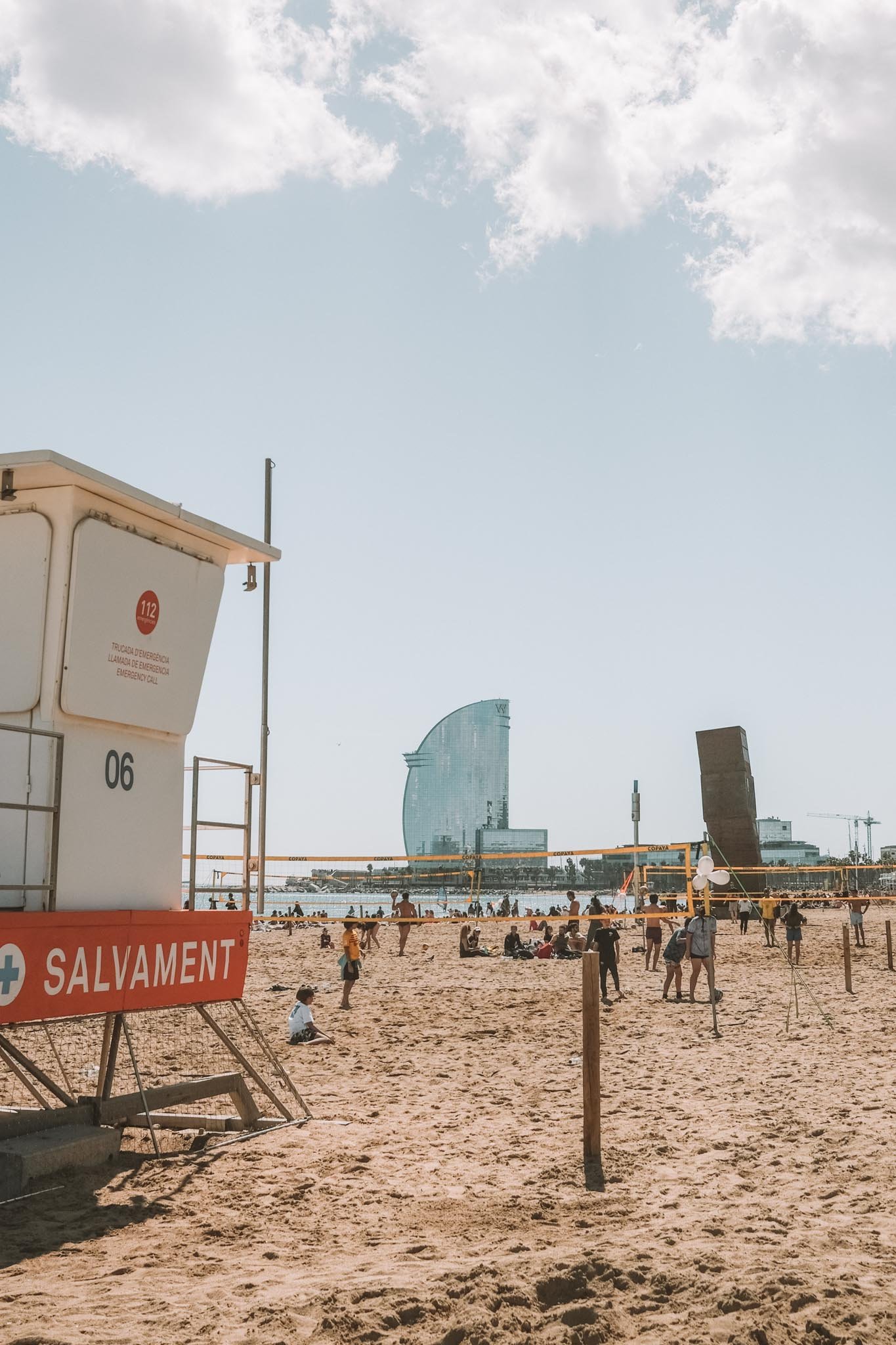
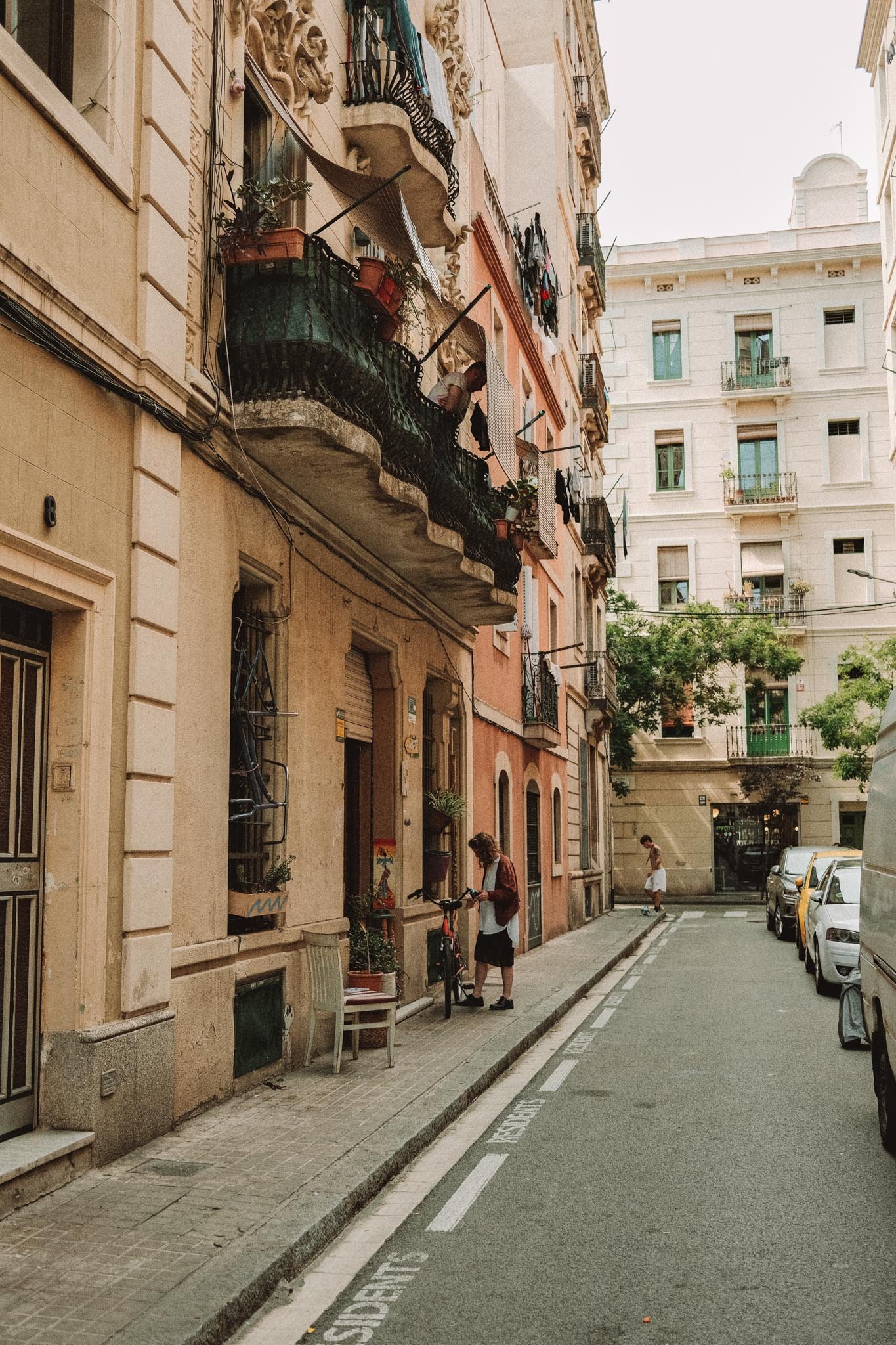
Barceloneta Neighborhood & Bogatell Beach
Best for: Warmer weather, beach lovers, and anyone who wants a more relaxed final afternoon.
Barcelona is a Mediterranean city, so I completely understand wanting to spend some time by the sea, especially if you're visiting during the warmer months.
For this option, I'd start by exploring Barceloneta as a neighborhood rather than heading straight to the beach.
Explore the Barceloneta Neighborhood
Getting there: From the La Boqueria area, allow approximately 20–35 minutes by public transport or 15–25 minutes by taxi, depending on traffic.
Duration: Around 45 minutes to 1 hour.
Barceloneta was originally a fishing neighborhood, and you can still see traces of its past in the narrow streets, small squares, and traditional buildings.
I recommend wandering through the neighborhood rather than sticking exclusively to the beachfront promenade. It's an interesting contrast to the Gothic Quarter and El Born, with a character of its own.
You can also stroll along the waterfront and enjoy the views of the Mediterranean.
While Barceloneta Beach is the most famous beach in the city, it's not where I'd recommend settling in for a beach afternoon. It gets extremely crowded, particularly in summer.
Spend the Afternoon at Bogatell Beach
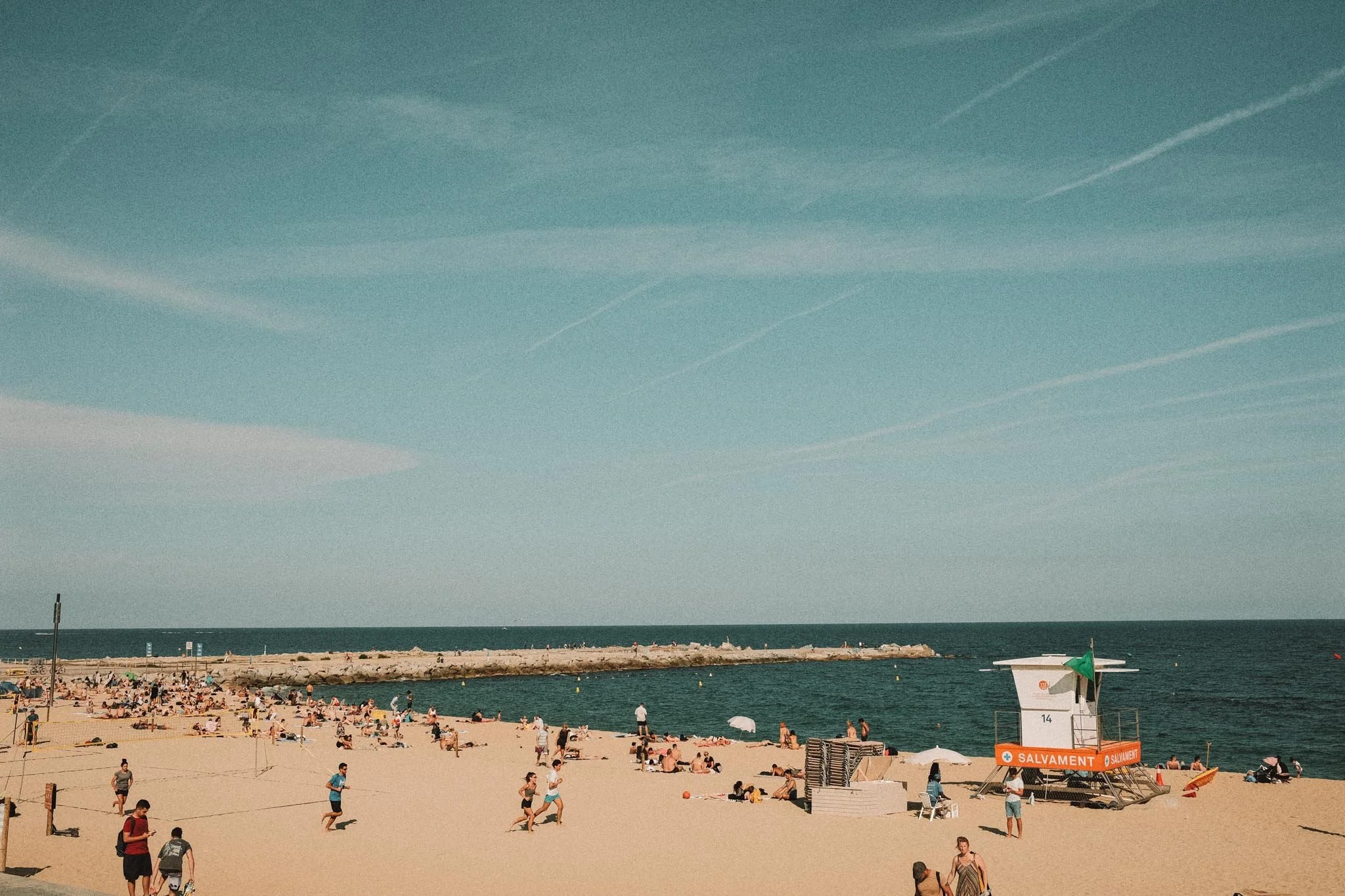
If you want to swim or spend a couple of hours relaxing on the sand, I'd head to Bogatell Beach instead.
Bogatell generally feels a little more relaxed than Barceloneta Beach, with a wider stretch of sand and more space to settle in, although it can still get busy during peak summer.
Getting there: From Barceloneta, allow approximately 30–40 minutes to walk along the waterfront, or take a taxi or suitable bus to save time.
Duration: 1.5–3 hours, depending on the weather and how much beach time you want.
In summer, this is your opportunity to swim, sunbathe, or simply relax by the Mediterranean after two busy days of sightseeing.
If you're visiting outside beach season, you can still enjoy the coastal promenade without committing to an afternoon on the sand.
Evening: Dinner in Poblenou
After spending the afternoon at Bogatell Beach, head into Poblenou for dinner. It's one of Barcelona's most interesting neighborhoods, with a mix of old industrial buildings, independent shops, and some excellent restaurants.
From Bogatell Beach, allow around 15–20 minutes to walk toward Rambla del Poblenou, one of the neighborhood's main streets. I'd recommend taking some time to wander around before dinner.
Where to eat in Poblenou:
Cuadro Barcelona: My pick if you're in the mood for Spanish food. A great option for rounding off your trip with another Spanish meal.
Entrepreneur: For Catalan cuisine, this is another restaurant worth considering if you want to explore the region's cooking.
Achaar Bar: If you've already eaten plenty of Spanish food over the past few days, Achaar Bar offers something different with its Indian-inspired dishes.
I'd choose whichever restaurant appeals to you most and make a reservation in advance, particularly during the summer months.
It's a lovely way to finish your final day in Barcelona, with a little time at the beach followed by dinner in a neighborhood that many first-time visitors never get around to exploring.
3-Day Barcelona Itinerary Overview
| Time | Stop | Duration | Cost |
|---|---|---|---|
| 10:30 AM | Paella Cooking Class & Guided La Boqueria Market Visit | Approx. 3 hrs | Check current booking price |
| 1:30 PM | Travel to Barceloneta Neighborhood | 20–35 min | Public transport fare or taxi |
| 2:00 PM | Explore Barceloneta — Historic Streets & Waterfront | 45–60 min | Free |
| 3:00 PM | Walk Along the Waterfront to Bogatell Beach | 30–40 min | Free |
| 3:30–3:45 PM | Bogatell Beach — Swimming, Relaxing or Coastal Walk | Approx. 2 hrs (flexible) | Free |
| 6:00 PM | Walk to Poblenou & Explore Rambla del Poblenou | 15–20 min walk + free time | Free |
| 7:30–8:00 PM | Dinner in Poblenou — Cuadro Barcelona, Entrepreneur or Achaar Bar | Flexible | Varies by restaurant and order |
Note: Times are approximate and depend on when your cooking class finishes and your preferred pace. In summer, allow time for swimming and relaxing at Bogatell Beach. During cooler months, enjoy the waterfront promenade and spend more time exploring Poblenou instead. Check restaurant opening hours and make reservations in advance.
Which Public Transport Ticket Should You Buy in Barcelona?
T-Casual: For most visitors spending three days in Barcelona, the T-Casual is a convenient option. It costs €13 for one zone and includes 10 journeys on eligible public transport services, including the regular metro and buses.
However, the T-Casual is not valid for entering or exiting the Aeroport T1 and Aeroport T2 metro stations on L9 Sud. You'll need a separate airport metro ticket or another valid travel pass for that journey.
T-Usual: The T-Usual costs €22.80 for one zone and offers unlimited journeys for 30 consecutive days. Unlike the T-Casual, it includes the L9 Sud airport metro stations. It's a personal, non-transferable ticket and may be worthwhile even for shorter visits if you expect to use public transport frequently.
Airport metro ticket: A separate ticket for the L9 Sud airport metro costs €5.90 in 2026.
My recommendation: If you're mainly exploring central Barcelona on foot and taking the metro occasionally, the T-Casual is usually sufficient. If you expect to use public transport frequently, compare the cost of the T-Usual before buying.
Prices are based on official 2026 fares and may change.


How to Get From Barcelona Airport to the City Center
Barcelona-El Prat Airport (BCN) is approximately 15 km from the city center, and getting into Barcelona is relatively straightforward. The best option depends on where you're staying, how much luggage you have, and which terminal you're arriving at.
Aerobús — Best for most first-time visitors
For most travelers, I'd recommend the Aerobús. It operates from both terminals and connects the airport with central Barcelona, including Plaça de Catalunya.
The journey typically takes around 30–40 minutes, depending on traffic. Buses run frequently, have space for luggage, and are much easier to navigate after a long flight than figuring out metro connections.
If you're staying near Plaça de Catalunya, Passeig de Gràcia, or the Gothic Quarter, this is usually my first recommendation.
Taxi — Best for convenience or traveling with luggage
Barcelona's official black-and-yellow taxis are another good option, particularly if you're traveling with several people or staying somewhere that requires multiple public transport connections.
Expect to pay roughly €35–€45 to reach central Barcelona, although the actual fare depends on your destination, traffic, and applicable supplements.
Official taxis use regulated fares rather than a fixed airport-to-city-center price. Follow the taxi signs outside arrivals and use the designated taxi rank.
R2 Nord Train — Best if you're arriving at Terminal 2
The R2 Nord train connects Terminal 2 with stations including Barcelona Sants and Passeig de Gràcia.
It's a useful option if you're staying near one of those stations, but there's one important detail: the train station is at Terminal 2, not Terminal 1.
If you arrive at T1, you'll first need to take the free airport shuttle to T2.
Metro L9 Sud — Useful for specific connections
Both airport terminals have metro stations on Line L9 Sud. However, this line doesn't go directly to Plaça de Catalunya or the Gothic Quarter.
You'll generally need to change lines, so I wouldn't automatically recommend it for visitors staying in central Barcelona.
Also, a regular T-Casual ticket isn't valid for entering or exiting the airport metro stations. You'll need an airport-valid ticket or travel pass.
My recommendation: Take the Aerobús if you're staying centrally, the R2 Nord if you're arriving at T2 and staying near a convenient station, or a taxi if you have heavy luggage and want to go directly to your accommodation.


Where Should You Stay for 3 Days in Barcelona?
For a first visit, I'd choose Eixample, particularly around Passeig de Gràcia or Rambla de Catalunya.
You'll have excellent restaurants, beautiful architecture, and convenient transport connections to the major attractions.
El Born is another good choice if you prefer historic streets and a lively restaurant scene, although it can be noisier at night.
For a detailed breakdown of the different areas, read my guide to Where To Stay in Barcelona.
What to Eat in Barcelona: Catalan Dishes Worth Trying
One of the best parts of visiting Barcelona is the food, but I'd encourage you to look beyond paella and the usual tapas menus. Catalan cuisine has its own traditions, and there are several dishes worth trying while you're here.
Pa amb tomàquet
One of the simplest and most recognizable Catalan dishes: bread rubbed with ripe tomato, olive oil, and salt, sometimes with garlic. You'll find it everywhere, from neighborhood restaurants to more elaborate dining spots. It's particularly good alongside cured meats and cheeses.
La bomba
Originally associated with Barceloneta, this fried potato ball is typically filled with meat and served with spicy sauce and aioli. It's one of the more distinctly Barcelona dishes on this list and worth trying while exploring the old fishing neighborhood.
Esqueixada
A traditional Catalan salad made with shredded salt cod, tomatoes, onions, peppers, and olive oil. It's light, refreshing, and particularly good during the warmer months.
Croquetas
You'll find croquetas all over Spain, but they're still something I'd recommend ordering in Barcelona. The classic jamón version is always popular, although restaurants often offer fillings such as mushrooms, chicken, or seafood.
Patatas bravas
Fried potatoes served with a spicy sauce, sometimes accompanied by aioli. They're a tapas staple, but the preparation varies considerably from restaurant to restaurant. A good plate of bravas is a useful test of a tapas bar.
Botifarra amb mongetes
A traditional Catalan dish of grilled pork sausage served with white beans. It's simple, filling, and a good choice if you want something more substantial than tapas.
Crema catalana
If you're ordering dessert, try crema catalana. It's a custard flavored with citrus and cinnamon, finished with a thin layer of caramelized sugar. It might look similar to crème brûlée, but the flavor and preparation are different.


What about paella?
Paella originated in Valencia rather than Barcelona, but you'll find rice dishes throughout Catalonia, including seafood rice, arròs negre (black rice made with squid ink), and fideuà, which uses short noodles instead of rice.
I'd avoid choosing a restaurant simply because it has enormous photographs of paella outside. For a good rice dish, look for somewhere that specializes in it rather than a restaurant serving everything from pizza to burgers.
If you're following this itinerary, you'll also have the chance to prepare paella yourself during the cooking class on Day 3.
My recommendation: Don't feel you need to try every dish in three days. Order a few things to share, try some traditional Catalan food, and save room for the restaurants that genuinely interest you.
When in Barcelona, I highly recommend going on a Food Tour.There are so many delicious food to try that it's a must! Book Food Tour Here
Barcelona Guide
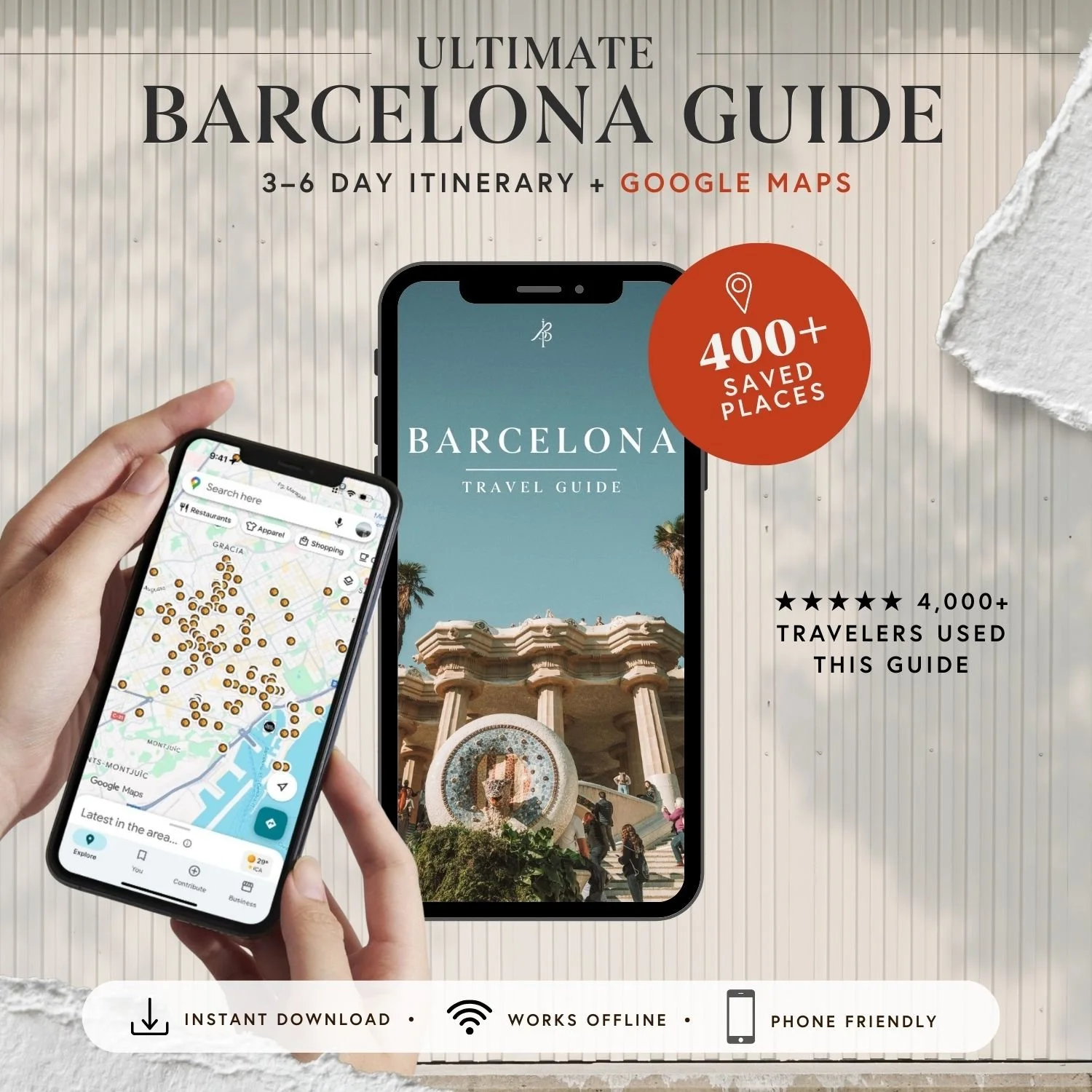
Skip the tourist traps! Access a local's curated Google Saved Maps of Barcelona's hidden gems, secret beaches, and authentic tapas bars. 400+ local spots where Catalans eat and shop.

Find my Barcelona restaurant, café, boutique, and sightseeing recommendations near you, with 400+ places organized in Google Saved Maps.
Includes the Barcelona Guide PDF, daily itineraries, walking routes, and practical local advice.
Instant download · Map access instructions included.
Barcelona Tourist Traps to Avoid
Barcelona is an incredible city to explore, but some of its busiest tourist areas are also where you're most likely to overpay for an average experience. These are a few things I'd avoid on a first visit.
Eating on La Rambla
La Rambla is worth walking along once, but I wouldn't recommend stopping there for a meal. Many of the restaurants along the main boulevard cater almost exclusively to tourists, with inflated prices and menus designed to appeal to everyone rather than do anything particularly well.
Walk a few streets into the Gothic Quarter or head toward Sant Antoni or Eixample, and you'll have much better dining options.
Choosing a paella restaurant based on its location
A waterfront terrace doesn't automatically mean good seafood or rice. Be particularly cautious of restaurants with oversized menus, photographs of every dish, and staff trying to persuade you to sit down.
Barcelona has excellent restaurants serving rice dishes, but it's worth choosing one intentionally rather than settling for the first place you see.
Spending your entire beach afternoon at Barceloneta Beach
Barceloneta is Barcelona's best-known beach, which also makes it one of the busiest, especially during summer.
I still recommend exploring the Barceloneta neighborhood, but if you want to spend a few hours by the sea, I'd continue toward Bogatell Beach instead. It's generally a more pleasant choice for relaxing, although it can also get busy in peak season.
Assuming every cultural experience is originally Catalan
Flamenco shows are heavily marketed to visitors in Barcelona, but flamenco's roots are primarily in Andalusia.
There's nothing wrong with attending a performance here, and some are excellent. However, if you're planning a longer trip through Spain, I'd personally save that experience for Andalusia and use your time in Barcelona to explore Catalan architecture, food, and neighborhoods.
For more practical advice, read my 15 Mistakes to Avoid When Visiting Barcelona guide.
Barcelona Safety Tips: What Visitors Should Know
Barcelona is generally a safe city to visit, but petty theft is a problem, particularly in areas with large numbers of tourists. The biggest concern for most visitors isn't violent crime; it's having a phone, wallet, or bag stolen while distracted.
After living here for years, these are the precautions I'd recommend taking.
Keep your phone secure in crowded areas. Be particularly careful on La Rambla, around major attractions, and on busy metro trains. Avoid keeping your phone in a back pocket or leaving it on a restaurant table, especially outdoors.
Pay attention to your bag on public transportation. Crowded trains and stations are common places for pickpocketing. Keep your bag zipped and positioned in front of you when necessary, rather than hanging loosely behind your shoulder.
Don't leave valuables unattended at the beach. If you're planning to swim, avoid bringing unnecessary valuables unless someone in your group can stay with your belongings.
Be aware of distractions. Some thefts involve one person distracting you while another takes your belongings. You don't need to be suspicious of everyone, but be mindful if strangers approach you unexpectedly in crowded tourist areas.
Consider a phone strap or secure crossbody bag. I personally find these useful when traveling because they make it easier to keep essentials close without constantly checking my pockets.
For everyday sightseeing, I like the UNIQLO crossbody bag because it's lightweight, practical, and holds more than you'd expect. If you're traveling with camera equipment, my GATTA Christie camera backpack is another option designed with secure storage in mind.
My recommendation: Don't let concerns about pickpocketing overshadow your trip. A few basic precautions are usually enough to make exploring Barcelona much more comfortable.


When is the best time to visit Barcelona for 3 days?
The best times to visit Barcelona for 3 days are:
Spring (April-May): Ideal temperatures, fewer crowds
Fall (September-October): Pleasant weather, local festivals
Avoid:
August: Extremely hot, crowded, many locals away
July: Peak tourist season, highest prices
December-February: Some attractions have shorter hours
For the perfect 3-day visit, target mid-May or late September.
4-Day Itinerary in Barcelona

If you have an extra day in Barcelona, go on a day trip! The Catalonia region is full of hidden gems that I still have to explore, even after living in Barcelona for five years.
Summer trips to the Costa Brava or Costa Dorada are a must, while Girona and Montserrat are conveniently accessible with just a short train ride. For easy day trips from Barcelona, check out my post: The 7 BEST Day Trips From Barcelona By Train.
If you are a wine lover, I highly recommend going on a wine tour of the Catalunya region. This tour takes you on a day trip to Montserrat and inlcude a family-run winery tour.
Book Your Tickets In Advance
How To Get Data/Internet in Barcelona Spain
I've been using Google Fi for my travels over the past few years and it's been fantastic. Google Fi offers a phone plan with the Unlimited Plus Plan at just $65, providing unlimited data and texts in the US and across 200+ countries. What I love most is its reliability and fast internet speed, which I found to be better to AT&T and T-Mobile, especially in places like Barcelona where others struggled with connectivity. My Favorite part is that it's hassle-free. Simply land in your destination and you're connected – to get started, download the Google Fi app and they will take care of the rest.
This may not be an option if you are locked in a contract with a different company. But if you are not, I highly recommend Google Fi. Learn more about it here.
Use code: XP6T39 to get $60 credit.
If you're hesitant about switching phone plans, consider Airalo as an alternative. This app offers the use of a local eSIM at very affordable rates, perfect for those who prefer not to change their existing phone plan. You can download it and explore the options available for many countries around the world. Download it here.
I hope you found this 3 days in Barcelona itinerary blog helpful!
Barcelona Travel Guide
Skip the tourist traps! Access a local's curated Google Saved Maps of Barcelona's hidden gems, secret beaches, and authentic tapas bars. 400+ local spots where Catalans eat and shop.
Frequently Asked Questions About Spending 3 Days in Barcelona
Is 3 days enough to visit Barcelona?
Yes, three days is enough to see Barcelona's major attractions while leaving some time to explore its neighborhoods. You can visit Sagrada Família, Park Güell, Casa Batlló, and the Gothic Quarter without spending your entire trip rushing between landmarks.
With this three-day Barcelona itinerary, you'll also have time for Gràcia, El Born, and the beach. Of course, you could easily spend a week here and still find new places to explore, but three days is a great introduction to the city.
Is Barcelona walkable in 3 days?
Barcelona is a very walkable city, particularly around the Gothic Quarter, El Born, Eixample, and Gràcia. However, the major attractions are spread across different neighborhoods, so I wouldn't recommend trying to walk everywhere.
For this itinerary, I'd combine walking with the metro and occasional taxis. You'll explore most neighborhoods on foot, but using public transportation between areas such as Park Güell and the city center will save time and energy.
Wear comfortable shoes. Barcelona's streets are generally easy to navigate, but you'll likely cover quite a bit of ground over three days.
Do You Need a Car in Barcelona?
No. I wouldn't recommend renting a car for a three-day Barcelona trip.
The city is easy to explore on foot and has an extensive public transportation network. Parking can be expensive, and driving through the center is often less convenient than taking the metro or a taxi.
For this itinerary, you'll mainly be walking, using the metro, and occasionally taking a taxi when it saves time.
Where should I stay in Barcelona for 3 days?
For a first visit, I'd recommend staying in Eixample, El Born, or the Gothic Quarter, depending on the atmosphere you prefer.
Eixample is particularly convenient for this itinerary, with good transport connections, plenty of restaurants, and easy access to Passeig de Gràcia. El Born is ideal if you prefer historic streets, independent shops, and a lively neighborhood atmosphere. The Gothic Quarter puts you right in the historic center, although some streets can be noisy at night.
If you're still deciding, read my guide to where to stay in Barcelona for a more detailed breakdown of the neighborhoods.
How much money do you need for 3 days in Barcelona?
Excluding accommodation, I'd budget approximately €70–€120 per person per day for a comfortable sightseeing trip, or around €210–€360 for three days.
That should cover a mix of casual meals, public transportation, and some paid attractions, although costs can rise quickly if you book several Gaudí interiors, guided tours, or a cooking class.
You can spend less by prioritizing free attractions and eating at more casual restaurants. If you're planning to visit Sagrada Família, Casa Batlló, Park Güell, and take a paella cooking class, budget separately for those experiences so you don't underestimate the total.
MORE SPAIN POSTS


Liked this post? Pin it!


About Diana
Diana is a travel writer and photographer based in Spain, with nearly 20 years of experience exploring the world. She's lived across multiple continents and has a soft spot for small towns, road trips, and places that don't make it onto most itineraries. She's been sharing it all on In Between Pictures since 2006.

